Canfield’s Phosphate Mine (1870-1881)

The New Jersey Highlands are festooned with abandoned iron mines, many of which are still visible. Some mines, like the Hibernia Bat Mine have large openings you can walk up to. Some are filled with water and tailings. Others are hidden behind fences and thickets of trees, weeds and vines.

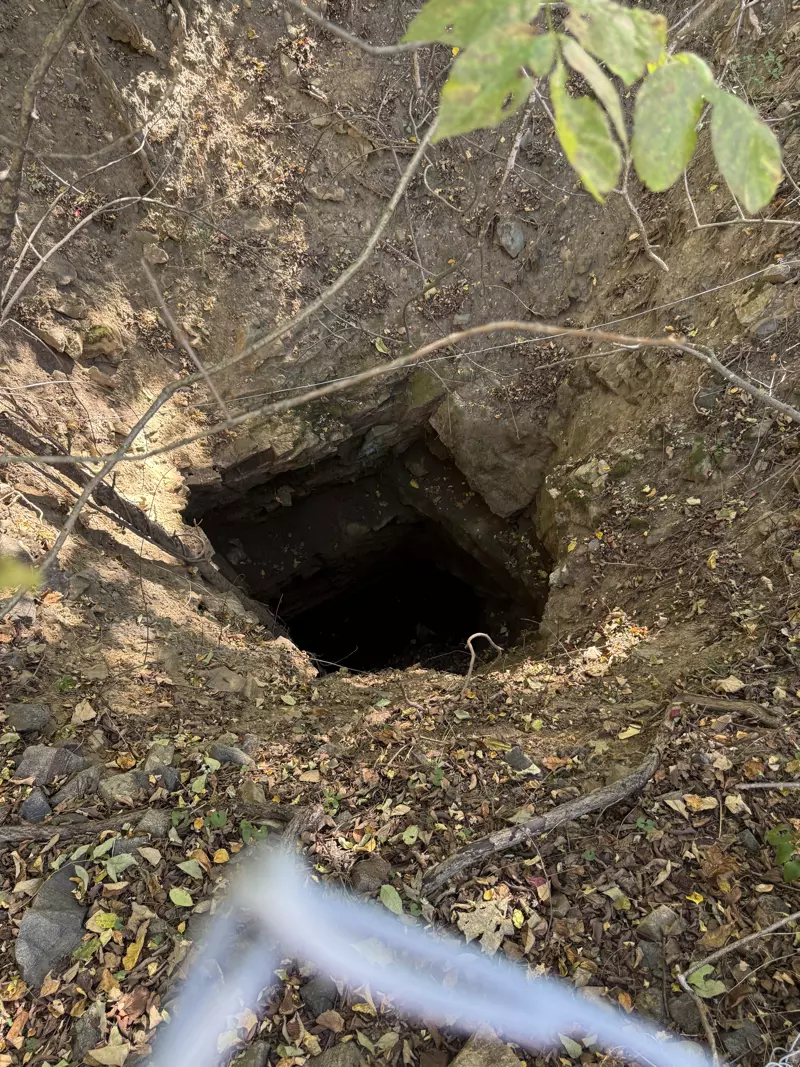
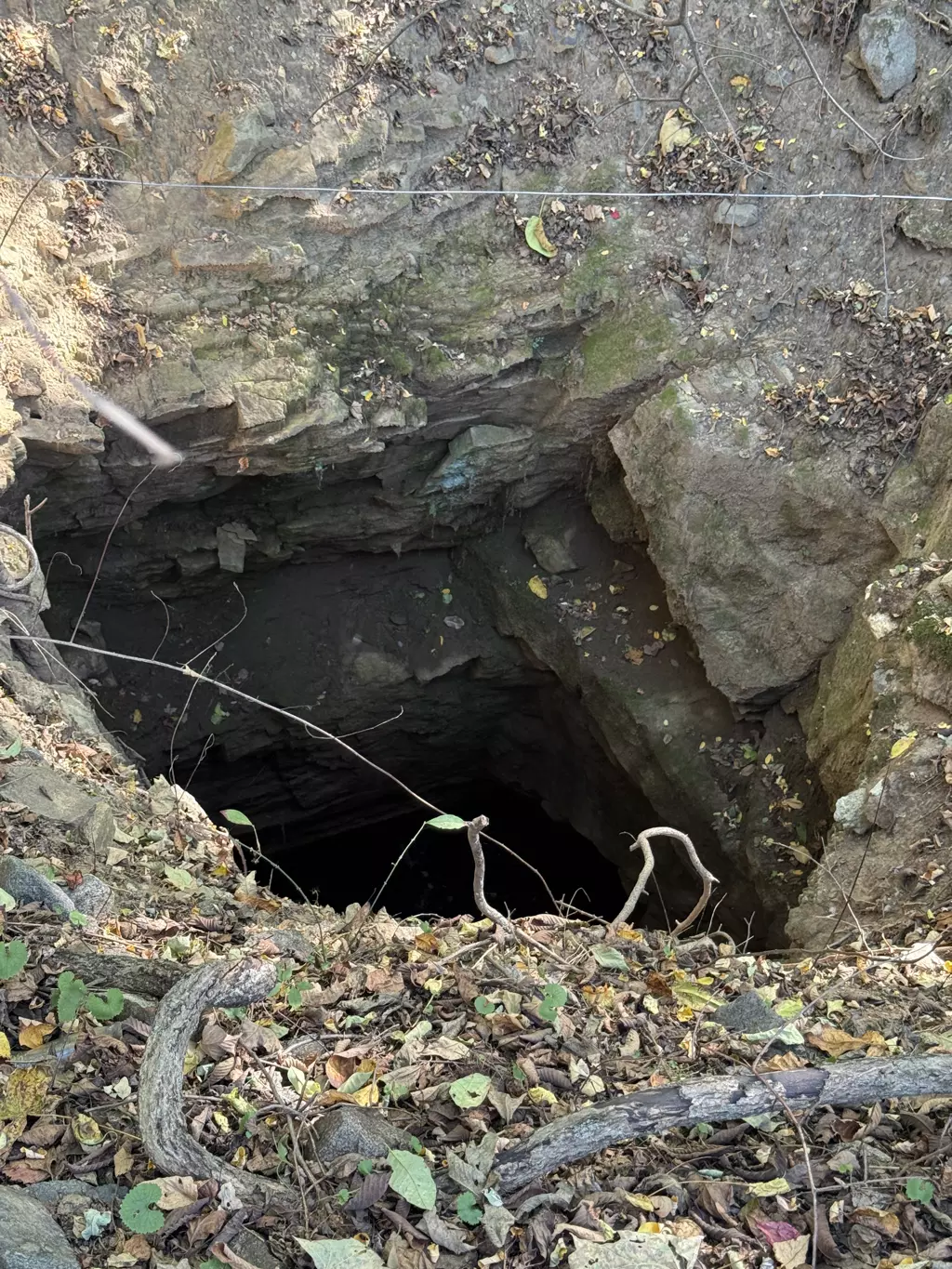
Canfield’s Phosphate Mine is an old iron mine located in Mine Hill Township, New Jersey, along Canfield Ave, nestled behind a fence and hidden by trees. Little remains other than a shaft that is visible through the chain link fence. Visitors cannot access it, but it is cool to see.

CANFIELDS PHOSPHATE MINE

CANFIELDS PHOSPHATE MINE

See the Mindat page for more information. Canfield’s Phosphate Mine, today, is best known for pink fluorescent Apatite found in old tailings from the mine. Pink fluorescent Apatite is found throughout the Highlands.

If you want to visit the inside of an actual mine in New Jersey, I highly recommend The Sterling Hill Mining Museum in Ogdensburg, NJ. Sterling Hill was a zinc mine (not iron) that is best known for fluorescent minerals like willemite and sphalerite.

The Sterling Hill Mining Museum

The Sterling Hill Mining Museum (Ogdensburg, NJ)

The Sterling Hill Mining Museum, located in Ogdensburg, New Jersey, offers visitors a tour of an old zinc mine, a large mining and mineral museum, and an opportunity to collect fluorescent minerals from a dump of rocks left over from mining operations. If you have an interest in mining, geology, rock collecting, or New Jersey history, it is worth a visit. Ogdensburg, and Franklin to its north, are internationally known for the variety of fluorescent minerals and the New Jersey state mineral Franklinite, which is a non-fluorescent zinc ore.

Note the variety of colors found in the rocks a the bottom of this photo. Even in daylight, these massive rocks are colorful — under a shortwave UV light, even more so.
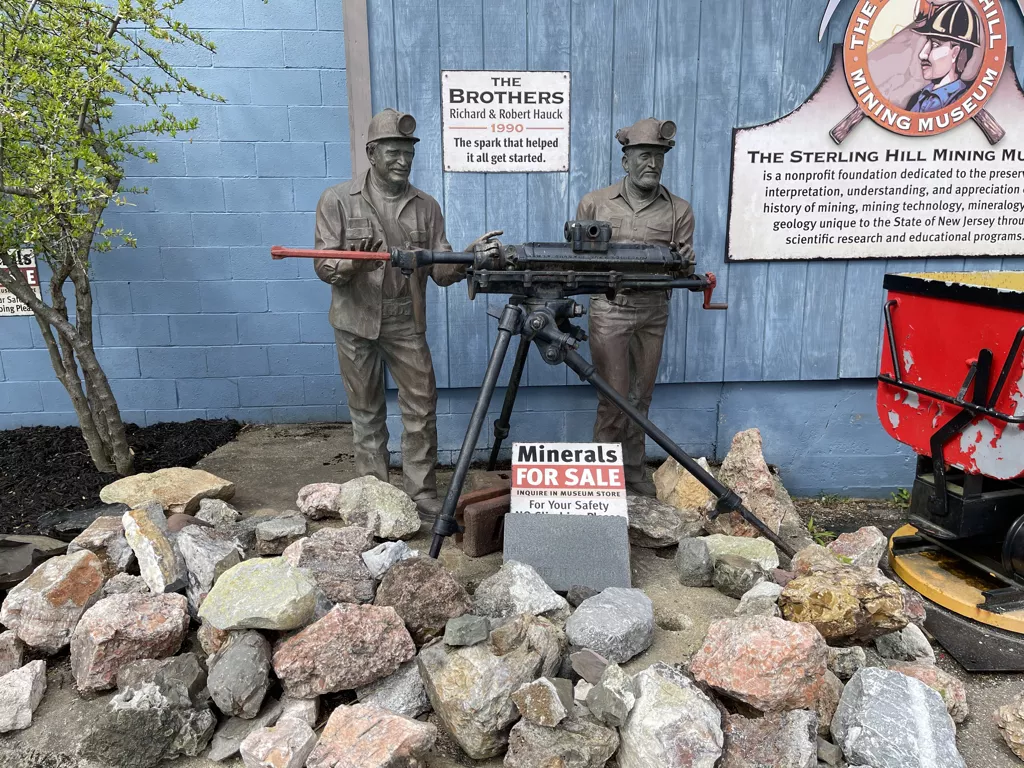
The Sterling Hill Mining Museum

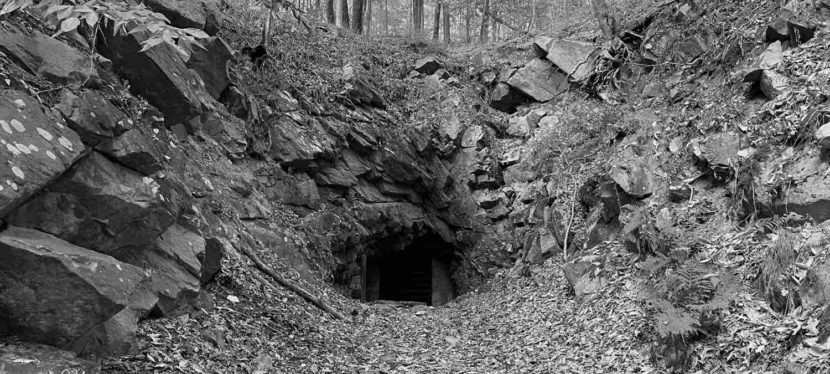
One of the entrances to the mine is on the side of the mountain. The mountain is named Sterling Hill.
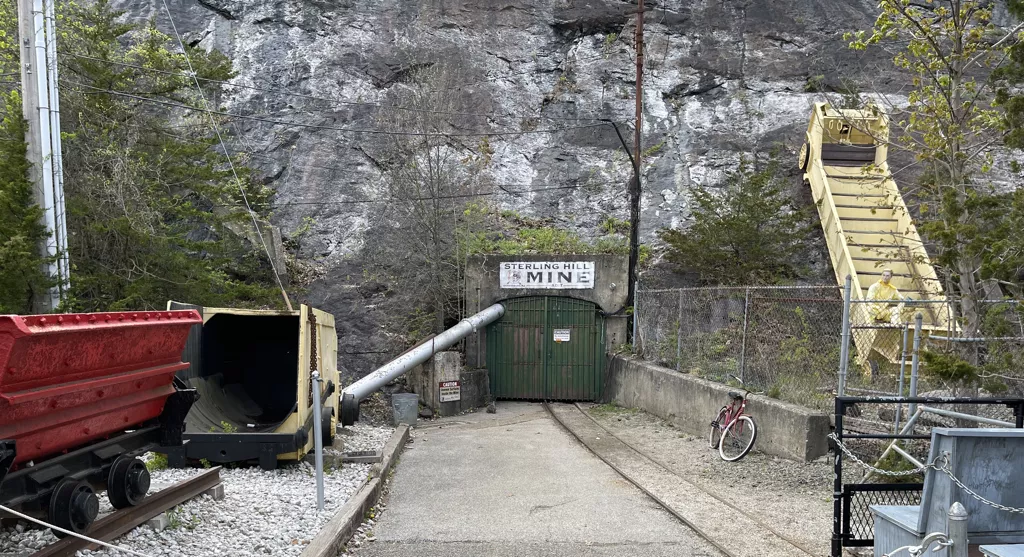
The Sterling Hill Mining Museum

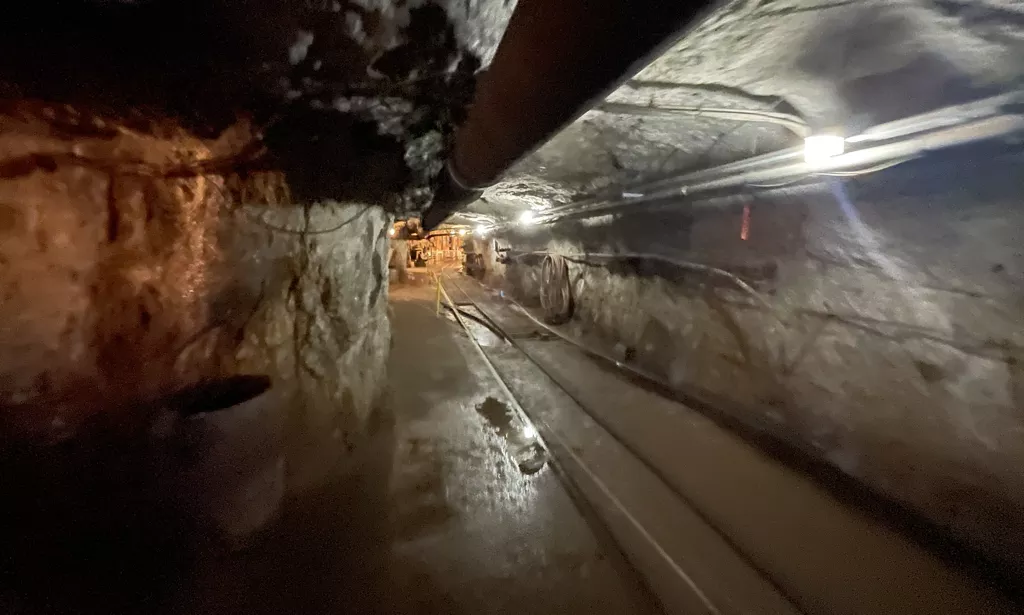
The mine is a half-mile deep, but it is mostly filled with water. The tour guide takes you only through the top levels of the mine. There is no danger of falling to lower levels and drowning. But just imagine falling into a pool of water as deep as the Empire State Building in total darkness — not that’s a horror movie!
The Sterling Hill Mining Museum

Look down a corridor and you’ll see mining equipment and a room where explosives were stored. Along the tour you’ll see mannequins handling assorted mining equipment like drills and jackhammers, setting dynamite charges, and riding an ore elevator.
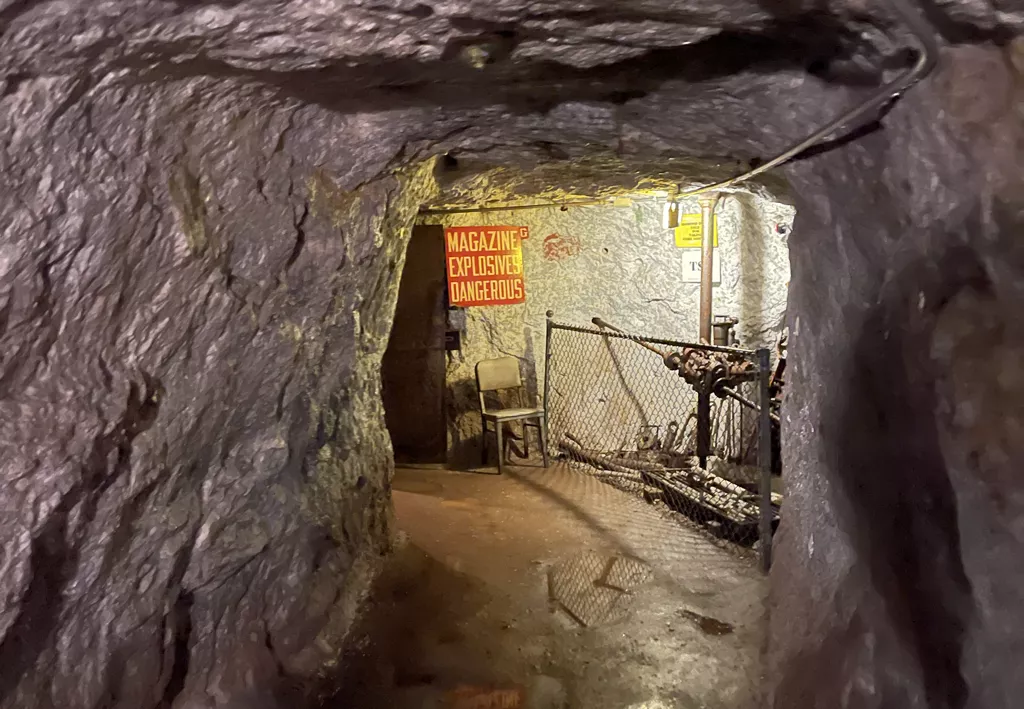
The Sterling Hill Mining Museum

Two large slabs of rock fluorescing orange and green under shortwave ultraviolet light. The walls of the mine behind the slabs also fluoresce. Most of the orange is calcite and the green is willemite, although these are not the old minerals that fluoresce these colors. Under white light, calcite is usually white to gray, and willemite is red or green.
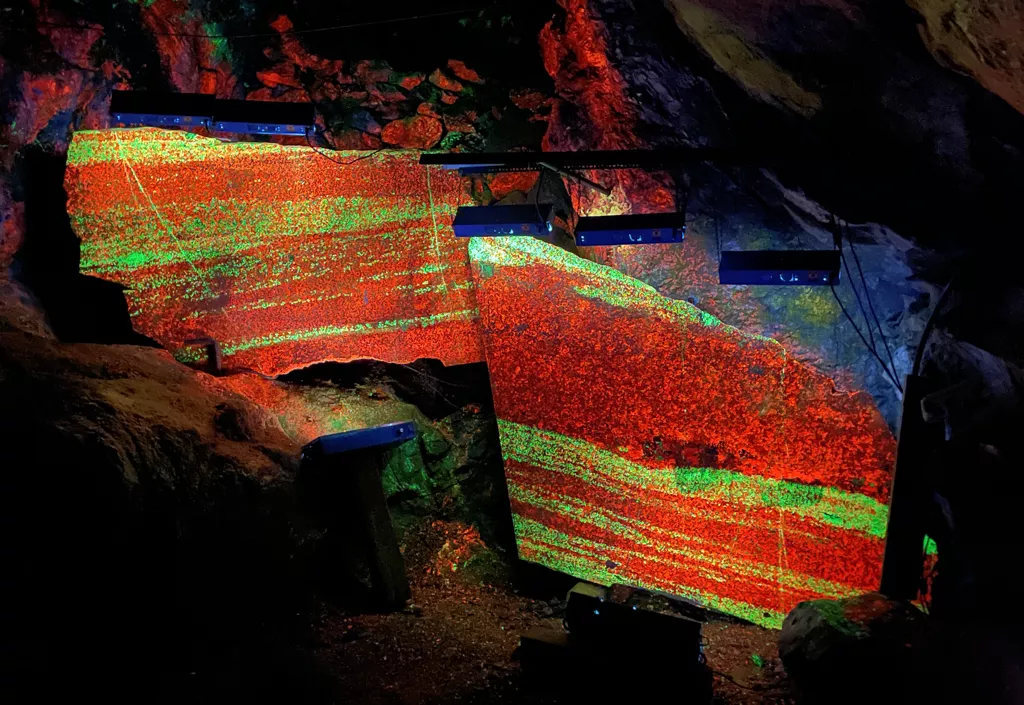
Fluorescent rocks. The Sterling Hill Mining Museum

This is the “rainbow room” portion of the tour, featuring an anticline of green, orange, purple, and green again fluorescing rock, with a large pile of loose rocks of differing colors in front of it. Not to be missed! In the museum, there are many rooms of fluorescing rocks to explore.
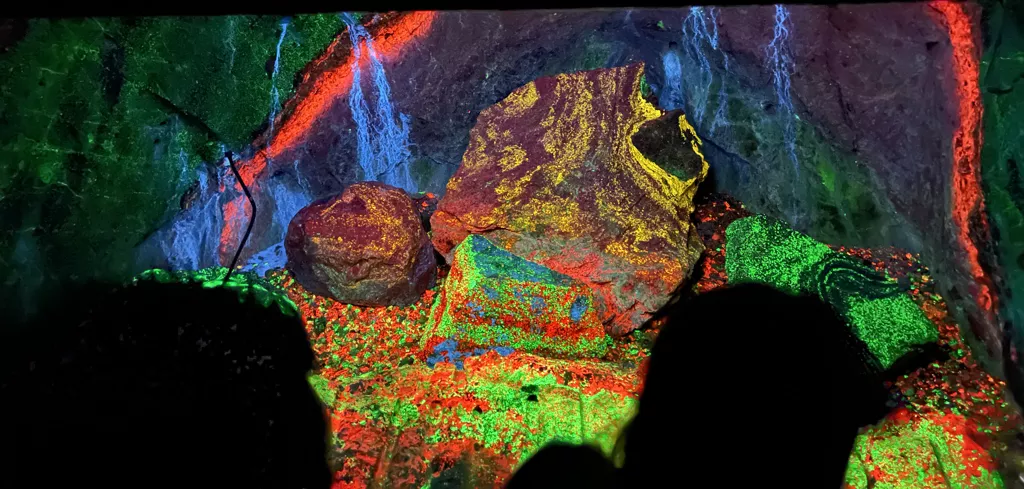
Fluorescent rocks. The Sterling Hill Mining Museum

Dynamite was used to break through the solid rock of the mountain to create tunnels and get the ore down to a liftable size. The museum has an impressive collection of detonators that were used to trigger explosions from a safe distance.
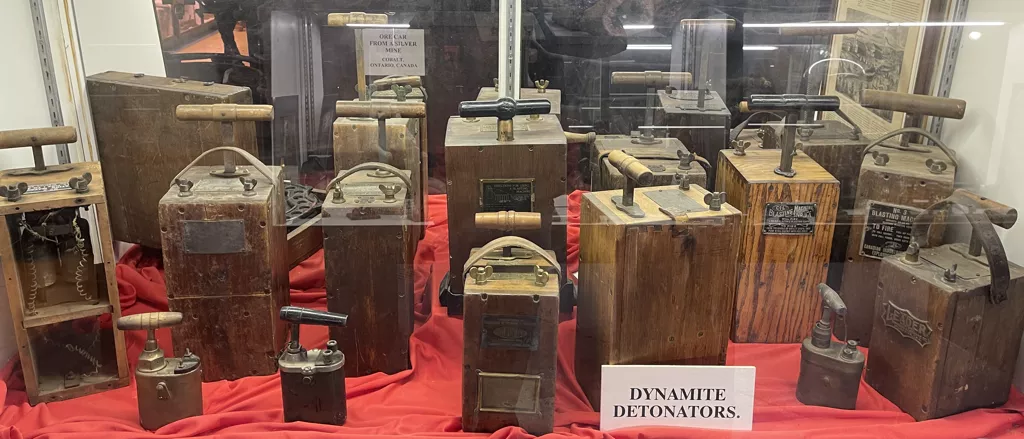
Dynamite plungers. Fluorescent rocks. The Sterling Hill Mining Museum

A bust of a happy miner with his mining lamp surrounded by actual carbide mining lamps. Originally miners wore hats fitted with candles.
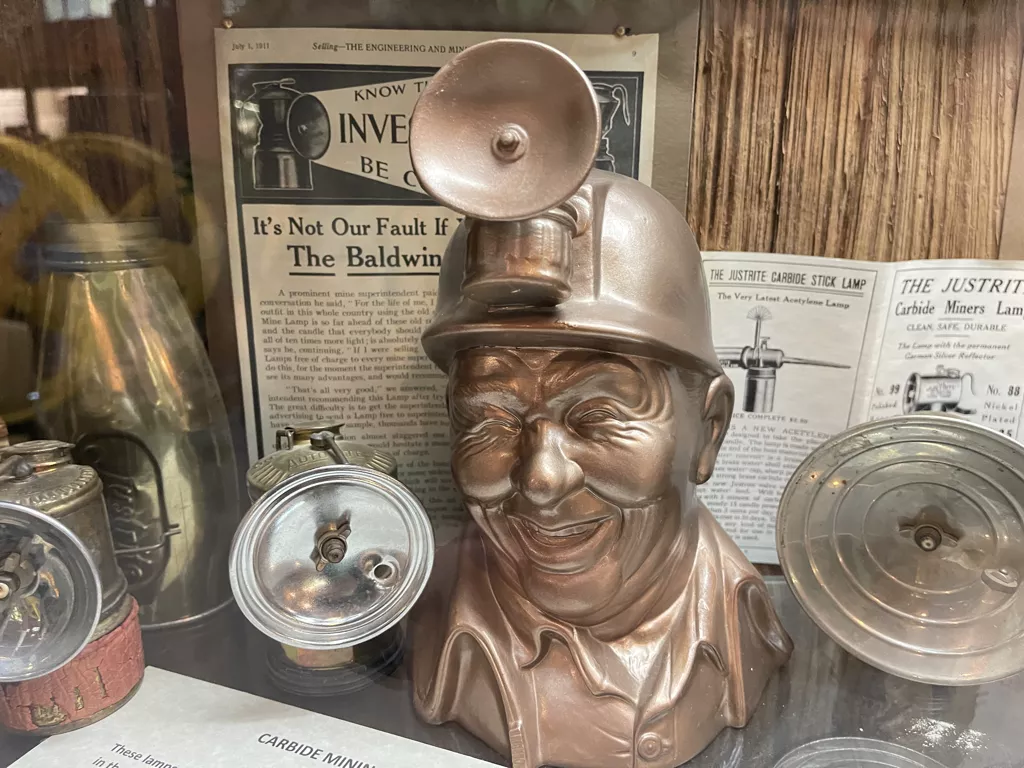
Happy Miner. Fluorescent rocks. The Sterling Hill Mining Museum

Safety first! Some mine safety cartoons from the mine tour and museum. I smacked my head on the walls of the mine a few times, so be careful. 🙂
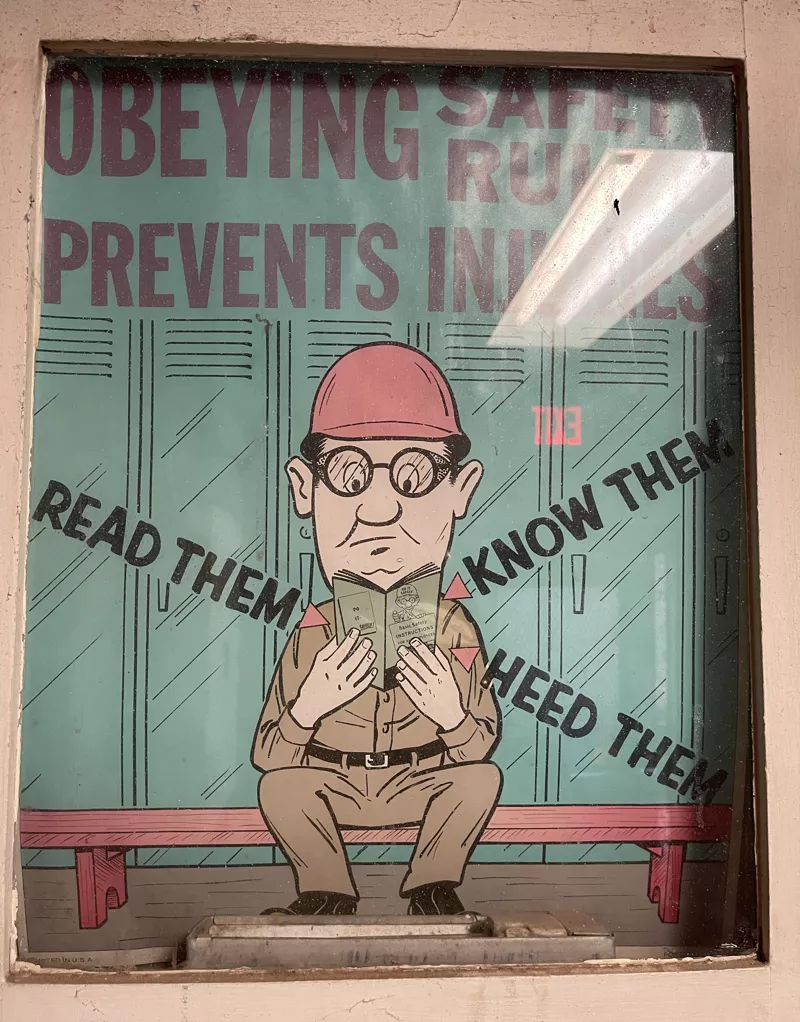
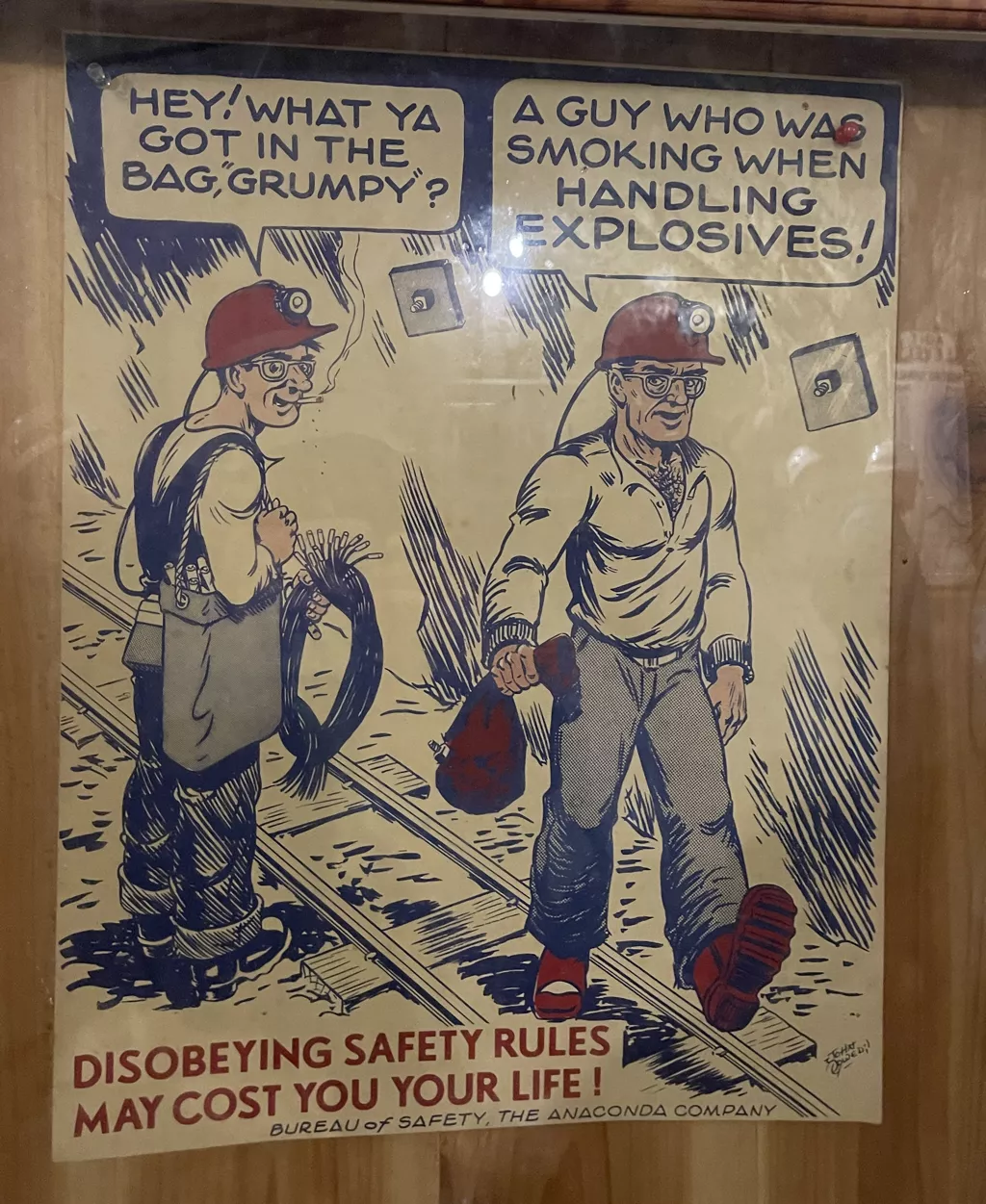
Danger. Fluorescent rocks. The Sterling Hill Mining Museum

Warning, Fluorescent rocks. The Sterling Hill Mining Museum

Hibernia cave

Hibernia Bat Mine Mine in Hibernia, New Jersey

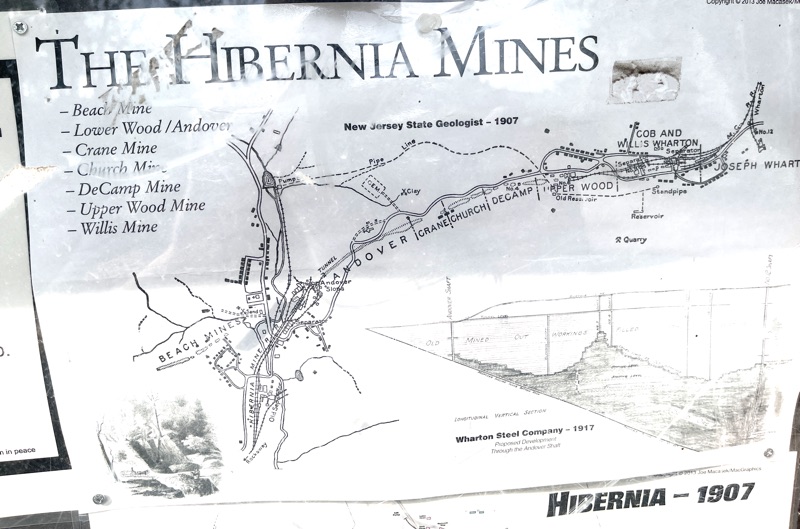
Nestled in a hillside in Hibernia, New Jersey, you’ll find the Hibernia mine (mindat.org page). In the 18th and 19th centuries, New Jersey was a top location for iron production. In the south there was bacteria-created “bog iron”, and in the north, in places like Hibernia, magnetite, magnetic iron ore, was torn from the bellies of mountains.

Map of The Hibernia Mines

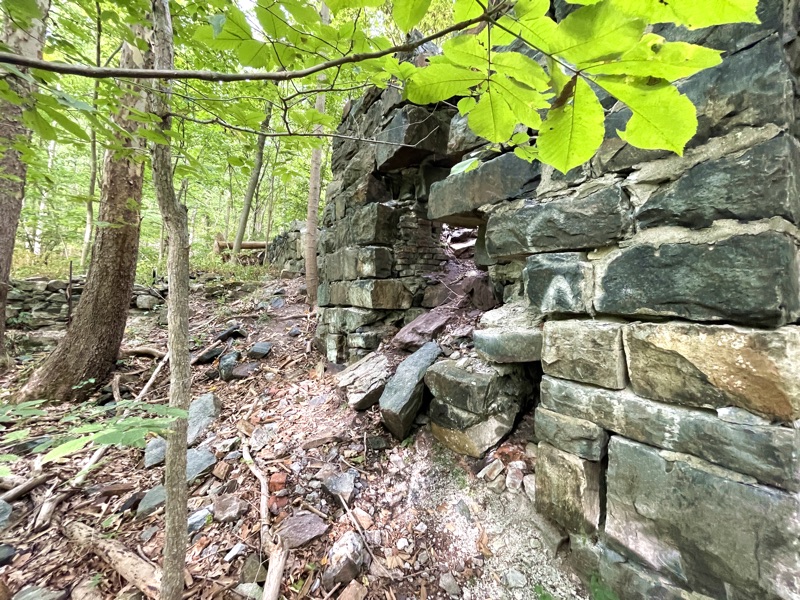
It took me a while to find the mine. The trail, starting at the trailhead at Green Pond Road & Lower Hibernia Road, forks in several places. One path leads to the graffitied ruins of a building, one leads to a pile of mine tailings, one leads to more ruins…

Hibernia  ruins

… and the top of the mountain, and one — the one you want — that heads toward the mine. Starting from the trailhead, I think it’s the second fork on the right; you walk up a hill and when you see what looks like the back of someone’s backyard, take the train on the left. When you get near the cave, you’ll feel the air get colder. There’s a wood platform on the left and on the right the final path to the mine.

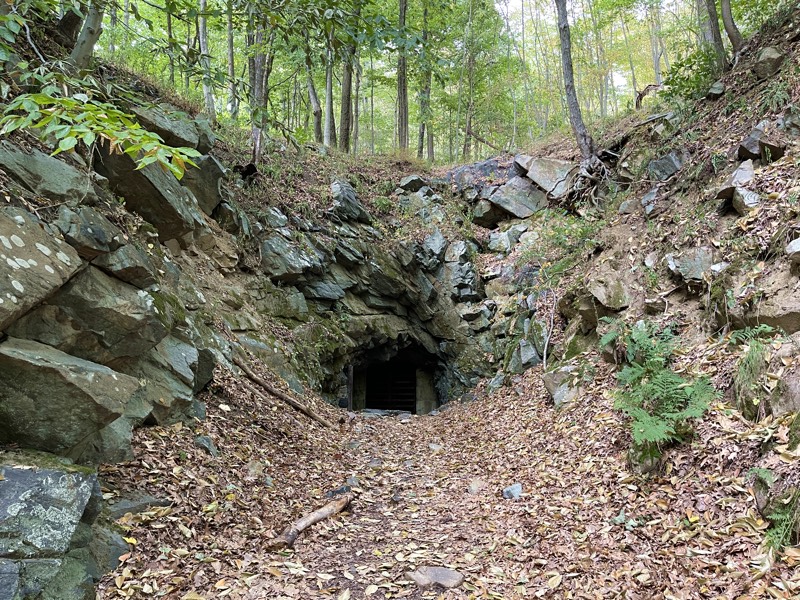
As you get closer…

Approaching Hibernia Mine

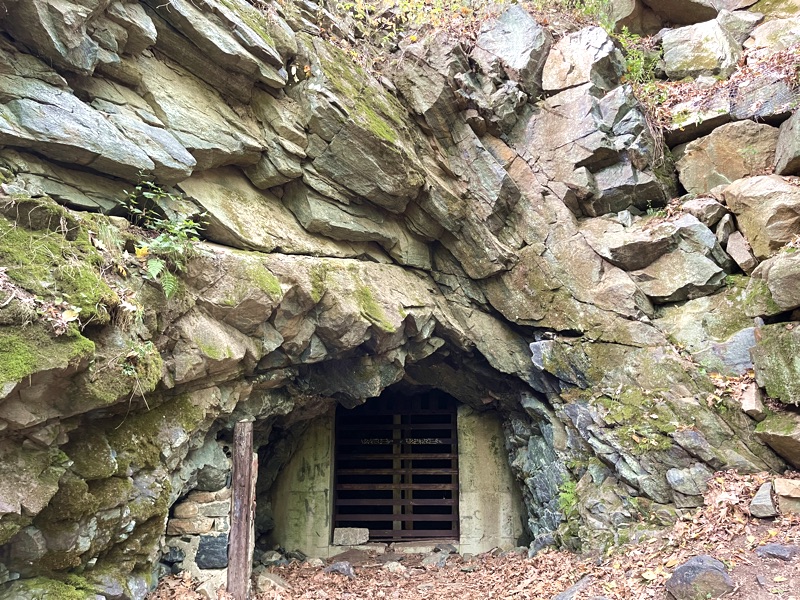
And closer to the mine entrance, you’ll notice the air coming from the mine is very chilly…

Hibernia Mine entrance

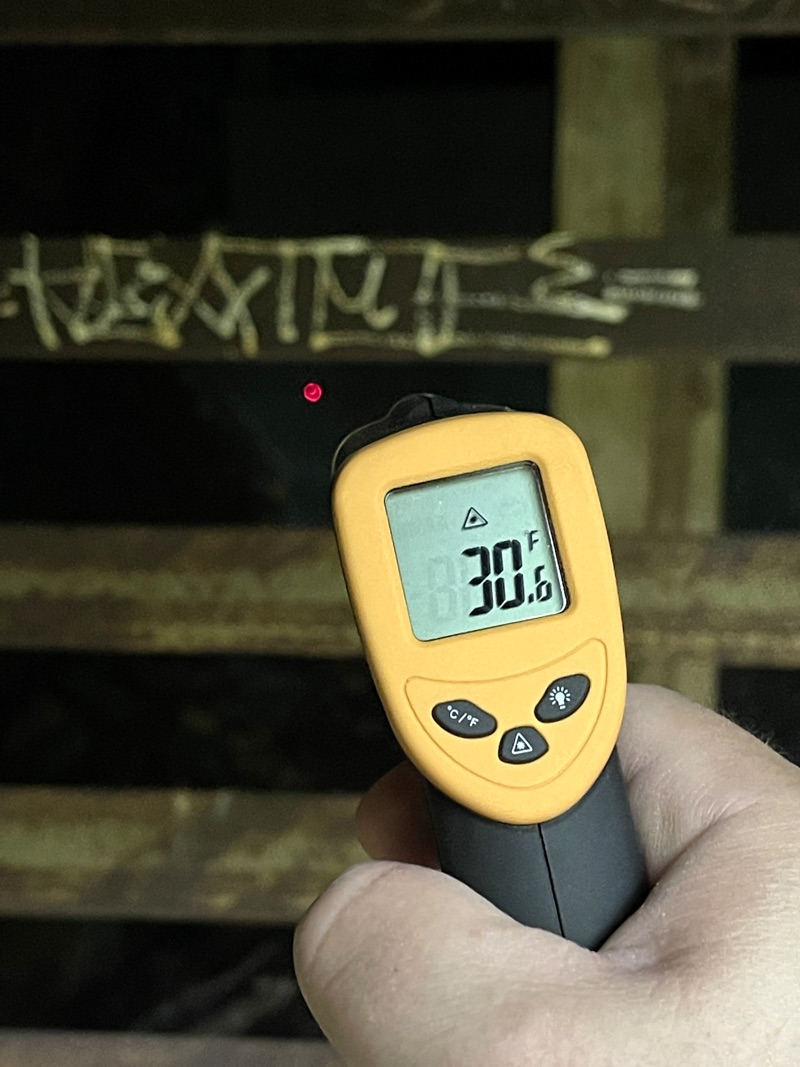
Freezing cold, in fact.
Hibernia Mine a chilly 30 degrees

The mine is sealed off to protect it, and the bats who live there, from vandals and ne’er-do-wells. Though you cannot explore inside, what can be seen from the outside is visually impressive, and the cool air is a refreshing treat on a hot summer day.

Geologically speaking, you’ll find all kinds of interesting rocks in the park surrounding the mine: massive glacial erratics, purple & white “pudding stone”, pink granite, magnetite, biotite, milky quartz, and lots of banded, and some folded, gneiss. Migmatite, maybe?

In terms of hiking and discovery, throughout the park, you’ll find the collapsed entrances to mines, piles of tailing from mines, a cemetery for miners, stone ruins of building used to process ore, massive bear turds, and plenty of beautiful New Jersey nature.