You may have heard of One Piece, the incredibly popular manga, anime and Netflix live series, featuring pirates with super-human-powers granted by Devil Fruits (fruits that grant super-natural powers), Haki (a supernatural force), martial arts training and sheer determination. You may have heard that Netflix is setting up new studios in Fort Monmouth, an old military base in Oceanport, New Jersey. Fort Monmouth sits between the Oceanport and Parkers Creek, two creeks that connect to the Atlantic Ocean via the Shrewsbury River. You may have also heard that New Jersey was once frequented by actual pirates. New Jersey — “a keg tapped at both ends my New York and Philadelphia” — was a rich source of wood, iron, game, and other necessities a pirate might require. What you might not know is a few of the fictional pirates featured in One Piece have names inspired by actual pirates that visited New Jersey shores!
I’ve spent 98% of my life in New Jersey and I started reading One Piece in late 2016. I’m not an expert on either, but here is some information that real pirates who visited New Jersey, their One Piece equivalents, and some locations in New Jersey that are suitable for a live One Piece location.
The real Captain William Kidd
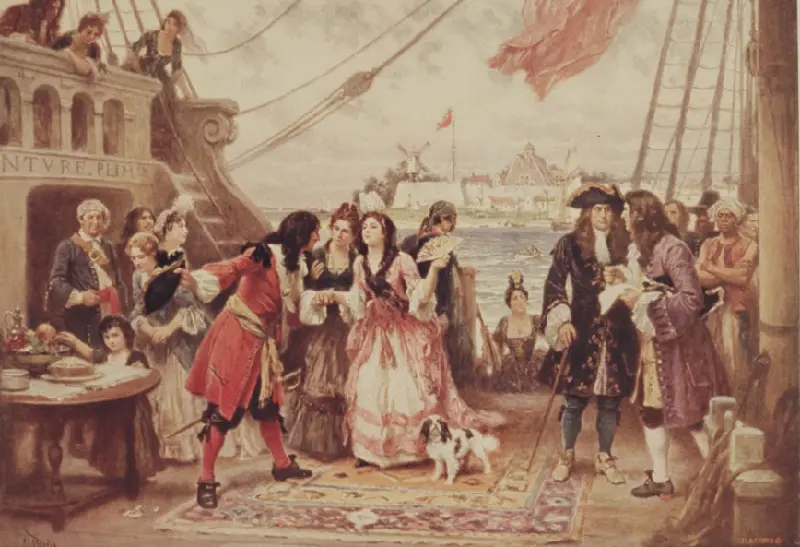
Captain Kidd in New York Harbor – J.L.G. Ferris – 1932 (illustration link).
Captain William Kidd was born in Scotland and lived between 1645 and 1701. He started his career as a privateer, which is like an official pirate of the state who can legally attack and blunder enemies of the state — in this case he worked for England and attacked French ships. You can think of “privateers” as the Seven Warlords of the Sea (Shichibukai) in One Piece. Somewhere along the way, Kidd screwed up and in 1698 attacked a ship named the Quedah Merchant which was captained by an Englishman, and that made him a wanted pirate. After a few more failures and realizing his ship Adventure’s Galley was falling to pieces, he headed to America to find safety with his buddy Governor Coote in Boston. Along the way he allegedly buried treasure in New Jersey and definitely in New York (Gardiners Island). Once in Boston, his buddy betrayed and arrested him. He was sent to Newgate (another One Piece name) Prison in England and hanged in May of 1701.
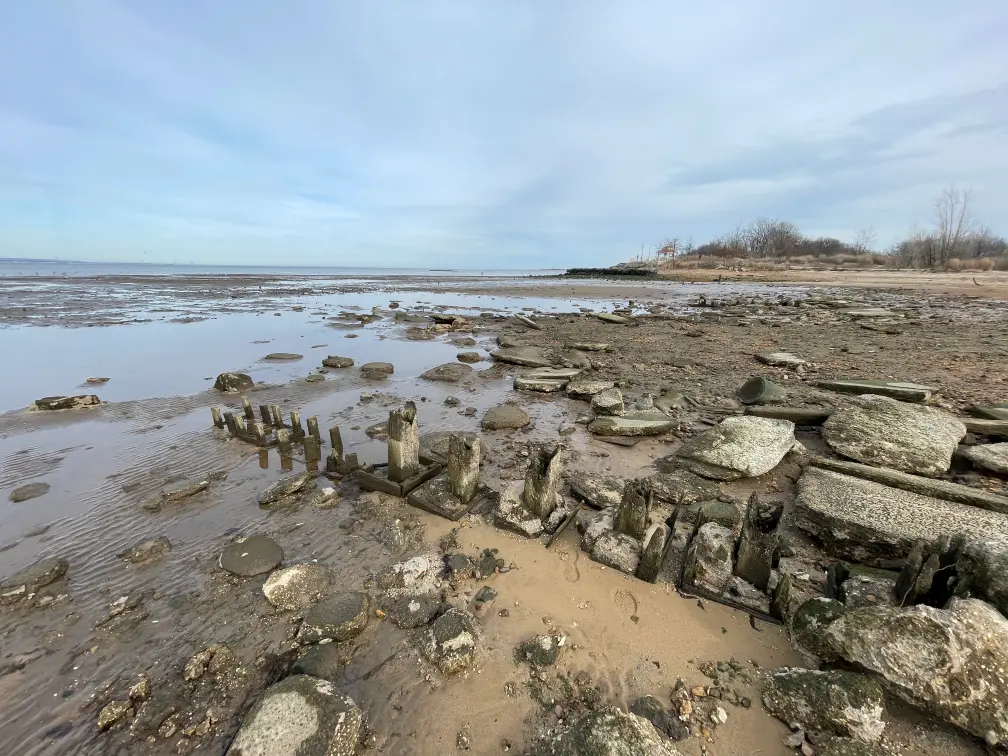
As legend has it, Captain Kidd buried may have burred treasure on Money Island, a small island off Cliffwood Beach, New Jersey, which has since eroded away, and at Treasure Lake in Cliffwood Beach (which still exists). In my personal experience, Cliffwood Beach has a lot to explore at low tide. Old ruins always appear, along with odd pieces of metal and the occasional fossil. You can walk out very far at low tide, and further still if you have waders on… at your own risk of course! Pirate treasure often comes with a curse.
Eustass “Captain” Kid in One Piece
One Piece fans know Eustass “Captain” Kid, captain of the “Kid Pirates” crew, a rival of Monkey D. Luffy, a member of the “Worst Generation” of pirates with the power of magnetism thanks to the Magnet-Magnet fruit. Eustass “Captain” Kid, with his red paint brush hair and motor-cycle goggles, looks like he sang for a late 1990s Nu Metal band. Although he occasional fights on the same side as our hero Monkey D. Luffy, he is situationally an anti-hero, but a villain at heart. If Kid lived in modern-day New Jersey, he would probably run a junk yard, using his magnet powers to move metal or disassemble rusting New Jersey bridges and factories, and at night we would hang out at rock clubs in Asbury Park or maybe Starland Ballroom in Sayreville.
The real Edward Teach (“Blackbeard”)
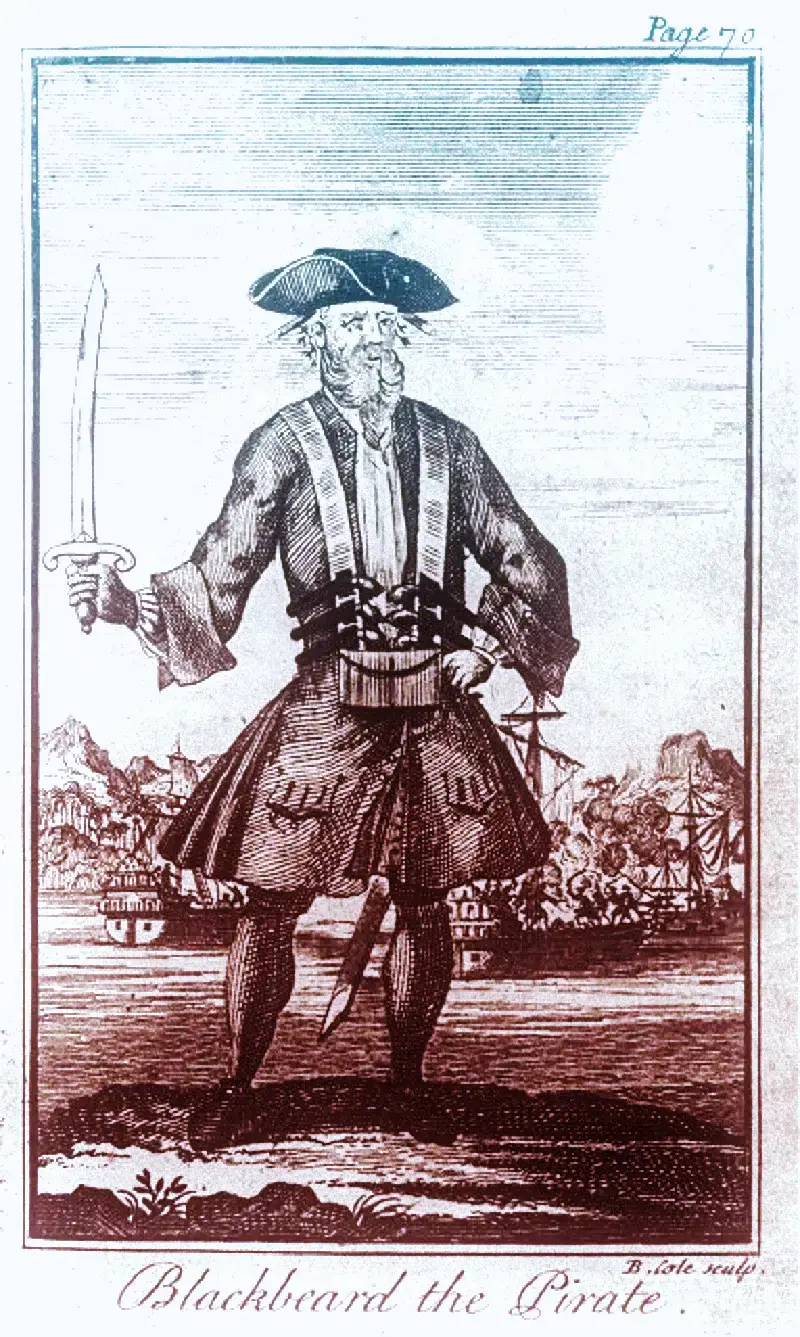
Blackbeard engraving by B. Cole, 1725 (illustration link).
Edward Teach aka Blackbeard was a true pirate and a generally nasty human being by any measure. He terrorized the east coast of North America looking for booty to plunder. Legend has it that Blackbeard sailed Delaware Bay and the Jersey Coast, and may have buried his loot in Cape May County at Higbee Beach, in Burlington, which is between Philadelphia and Trenton, and Petty Island which lies on the Jersey Side of the Delaware river across from Philadelphia! Teach was Teach was born in England in 1680, and killed during a naval battle in 1718 off the coast of Ocracoke Island in North Carolina.
Take a gander at this description of Blackbeard from the 1898 book “Buccaneers and Pirates of Our Coasts” by Frank R. Stockton:
He wore a long, heavy, black beard, which it was his fancy to separate into tails, each one tied with a colored ribbon, and often tucked behind his ears. Some of the writers of that day declared that the sight of this beard would create more terror in any port of the American seaboard than would the sudden appearance of a fiery comet. Across his brawny breast he carried a sort of a sling in which hung not less than three pairs of pistols in leathern holsters, and these, in addition to his cutlass and a knife or two in his belt, made him a most formidable-looking fellow.
Sounds familiar to me!
Marshall D. Teach aka Blackbeard from One Piece
“Zehahahahahaha!” Marshall D. Teach aka Blackbeard is a super-villain, and a top contender to be Luffy’s #1 rival. He is a massive human being with a big belly, a busted grill, a pirate costume straight out of Spirit Halloween, a thirst for booze, and a black beard (of course). He packs three pistols and two Devil Fruits (the only character to have two Devil Fruits): the Dark-Dark Fruit, which gives him black hole-like powers, and the Tremor-Tremor Fruit which allows him to shake and quake the world around him. His crew, the Blackbeard pirates, are nasty too. Avoid! If Blackbeard lived in New Jersey today he would gorge himself on bagels, pizza and hoagies, and take over every organized crime syndicate.
Additional Reading (books):
- “Blackbeard the Pirate and Other Stories of the Pine Barrens” by Larona Homer
- “Pirates of New Jersey” by Mark P. Donnelly and Daniel Diehl
- “Pine Barrens: Legends & Lore” by William McMahon
- “The Pirate Piney” by DiGerolamo (this book is Fictional)
Possible New Jersey Locations for One Piece
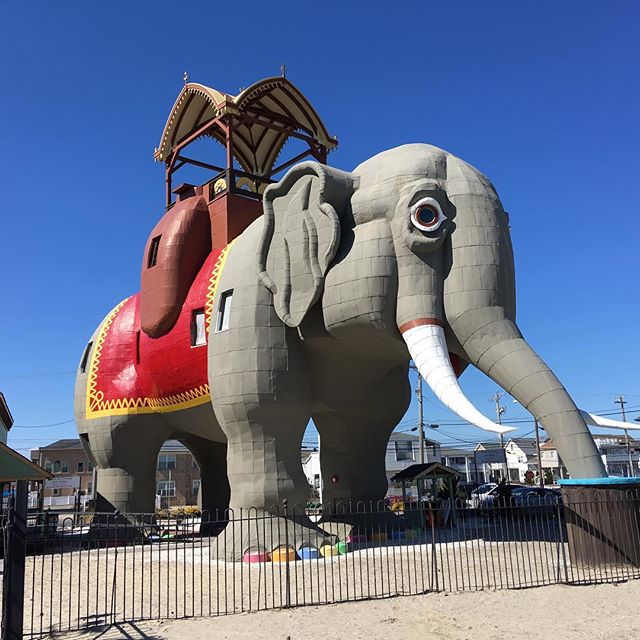
Lucy the Elephant in Margate
This massive roadside attraction is reminiscent of Zunesha, the 20-miles high elephant with a city on its back. You can visit Lucy in person at 9200 Atlantic Avenue in Margate, New Jersey. Visit her website.
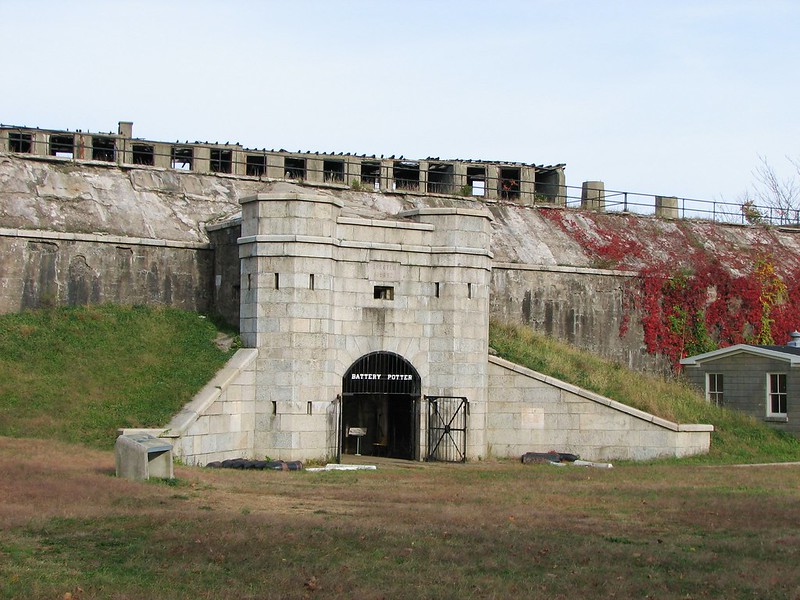
Abandoned Military Bases
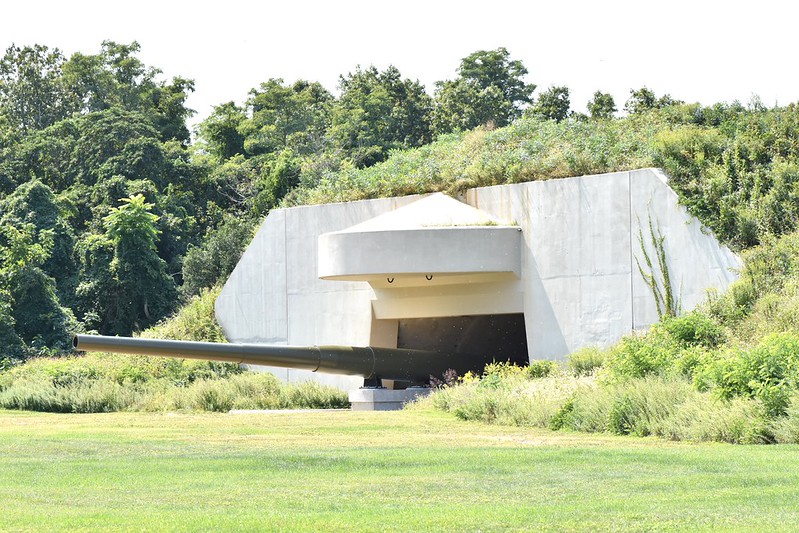
New Jersey has many military bases, both operational and retired. There is a large, old base in Highlands, New Jersey called Fort Hancock and Sandy Hook Proving Ground National Historic Landmark that you can visit. Most of it is located on Sandy Hook, a massive six-mile-long public beach. You can tour the old bases, with include massive concrete forts, giant 16″ guns and space-age nuclear defenses.
New Jersey is mostly surrounded by water
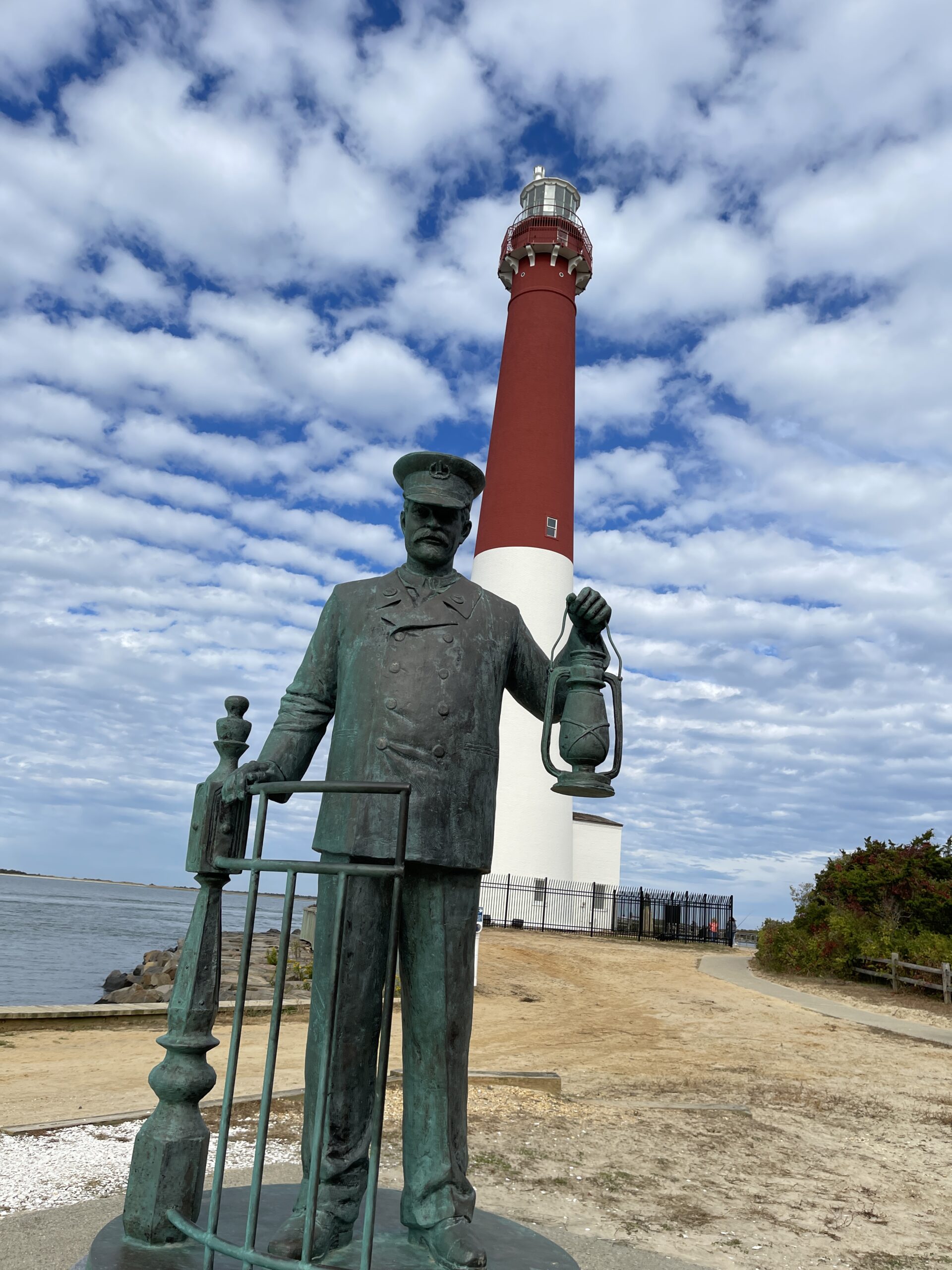
If we count the Delaware river, New Jersey is essentially a enormous yam-shaped peninsula. Jersey has 1,792 miles of coastline including ocean, bays and other coastal areas (NJDEP website) — plenty of places for pirates, privateers and other boat-enthusiasts to stash treasure and do battle. New Jersey, as you might imagine, is famous for its lighthouses. You can visit New Jersey’s lighthouses and life saving stations during the Lighthouse challenge of New Jersey that happens each October.
Cannonballs and Ship Timbers
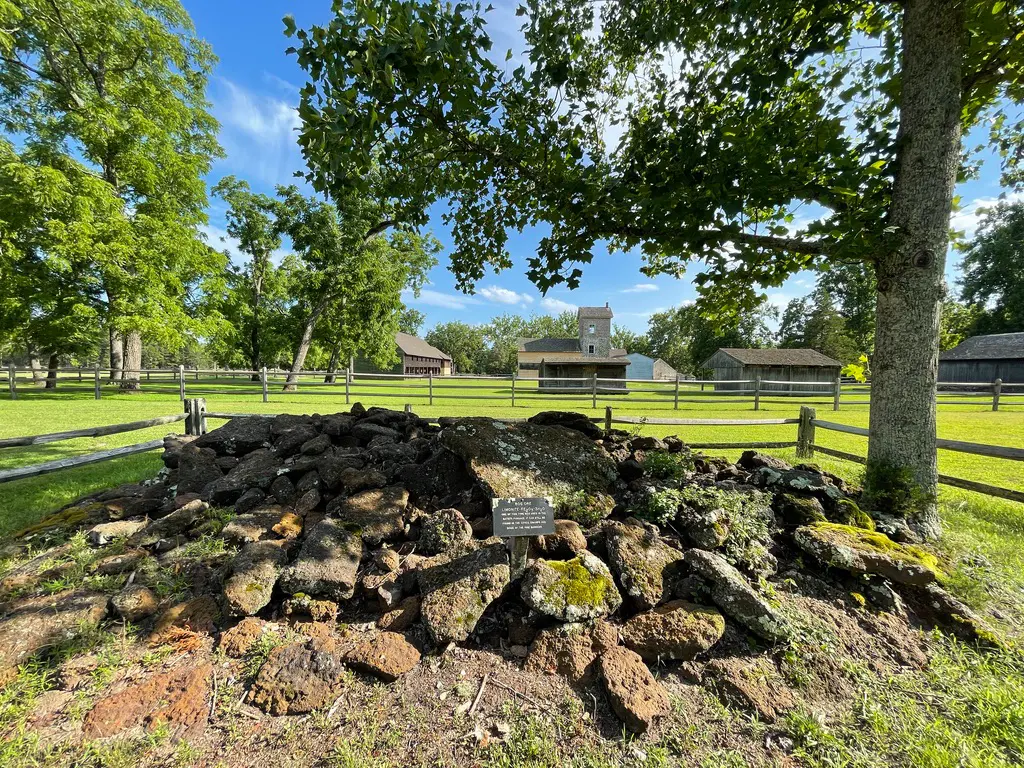
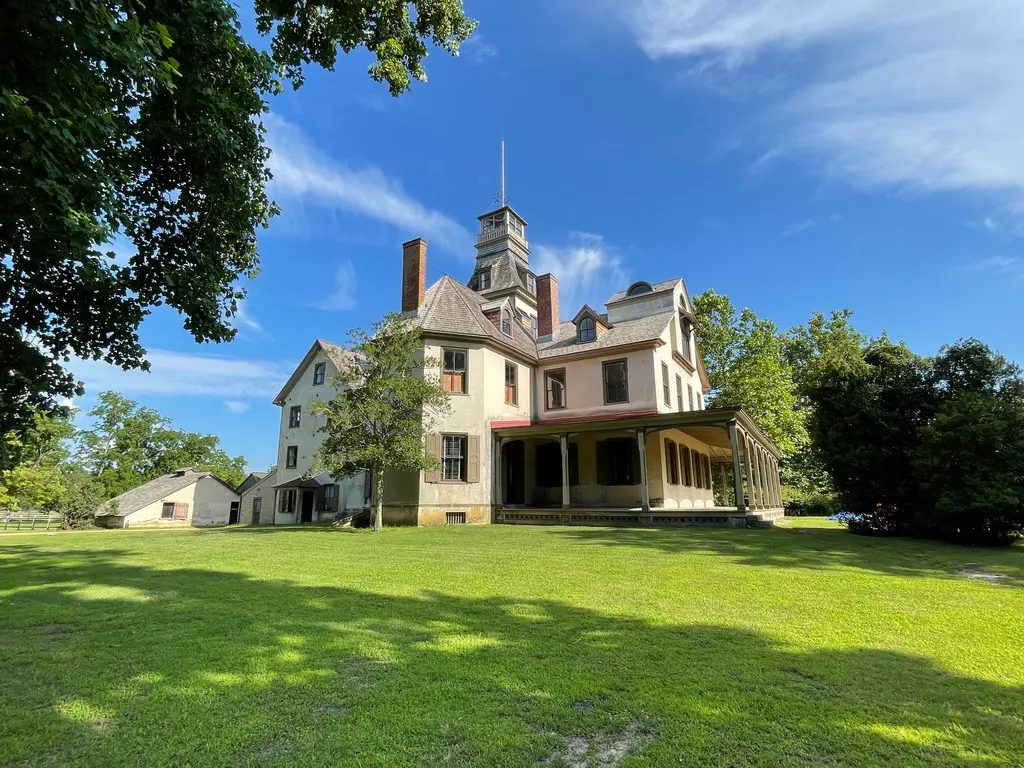
New Jersey was also a source of iron for cannons and cannonballs. Iron in New Jersey was sourced in two ways: 1) Bog Iron – iron that precipitates into iron-rich sandstone in the Pine Barrens, and 2) in mines in the New Jersey Highlands. Batsto, New Jersey is an 18th century town where iron (and glass) was made to make iron munitions and arms.
A pile of bog iron:
A house on the Batsto property:
Forests in New Jersey were often clear-cut for fuel and ship timbers. Atlantic white-cedar forests in New Jersey were clearcut 4 or 5 times since 1700 (USDA. In spite of frequent deforestation, New Jersey has a shocking amount of trees — 41% (USDA, so they grew back!
Considering New Jersey’s pirate history and watery location, Netflix should consider filming a few episodes of One Piece in the state it now calls home.