Lusscroft Farm in Wantage, New Jersey

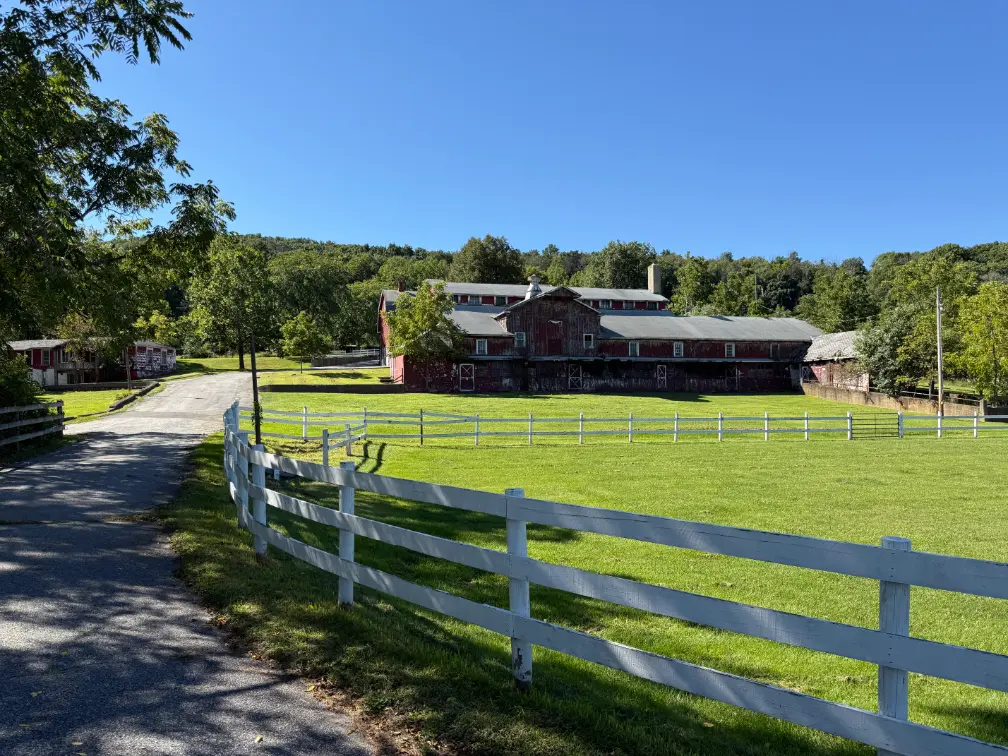
A while ago I wrote about New Jersey’s volcano and sodalite mountain peaks. Down the road from the volcano and down the hill from those fluorescent sodalite mini-mountains exists the pastoral majesty of Lusscroft Farm (50 Neilson Rd, Wantage, NJ). Lusscroft looks like a picture postcard of a farm: a large red barn, white grain silos and vast green pastures, hugged by riparian tree rows. This historic farm is owned by the State of New Jersey, and maintained by passionate volunteers, a thrift store, and private donations.
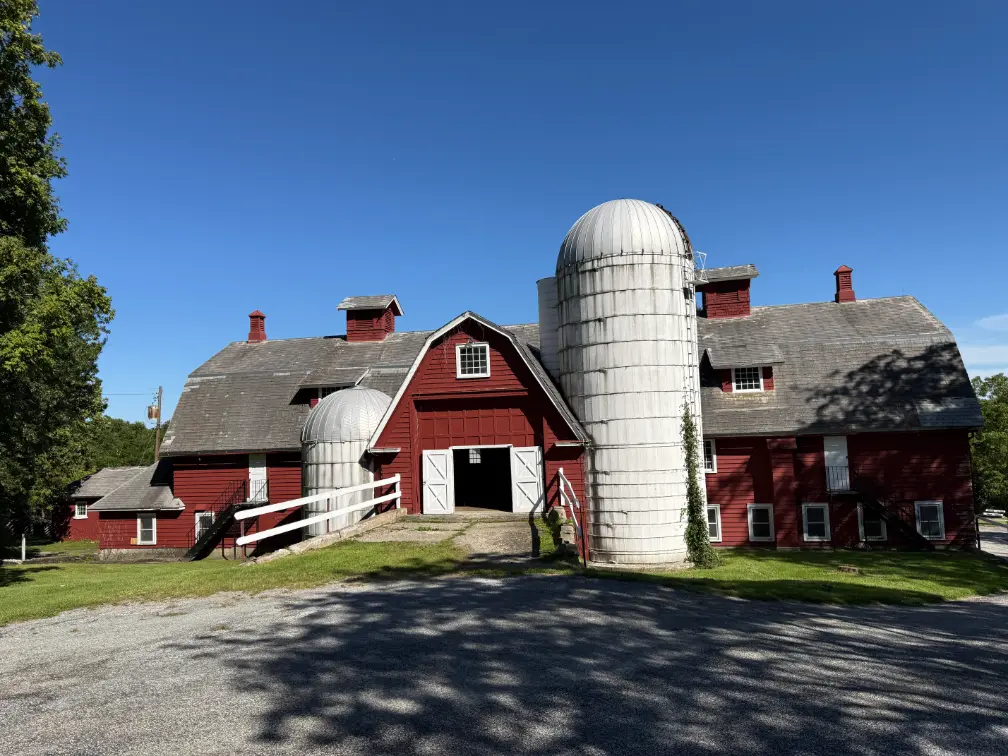
Barn

Pastoral scene

Inside the barn (I feel like I was swallowed by a whale):
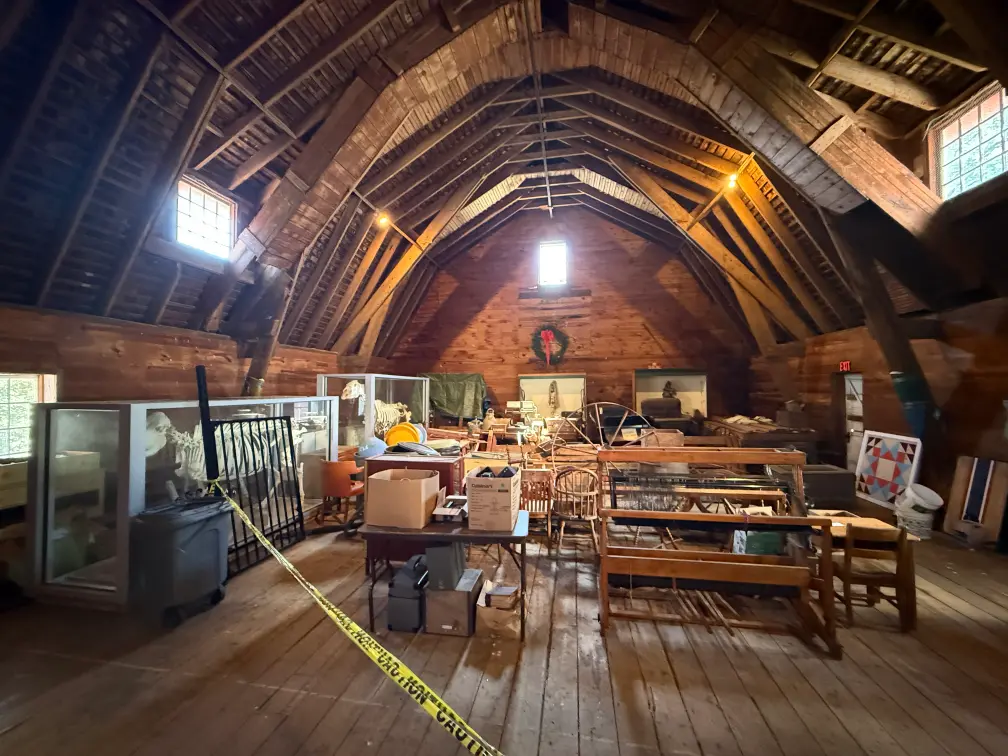
Inside the Barn

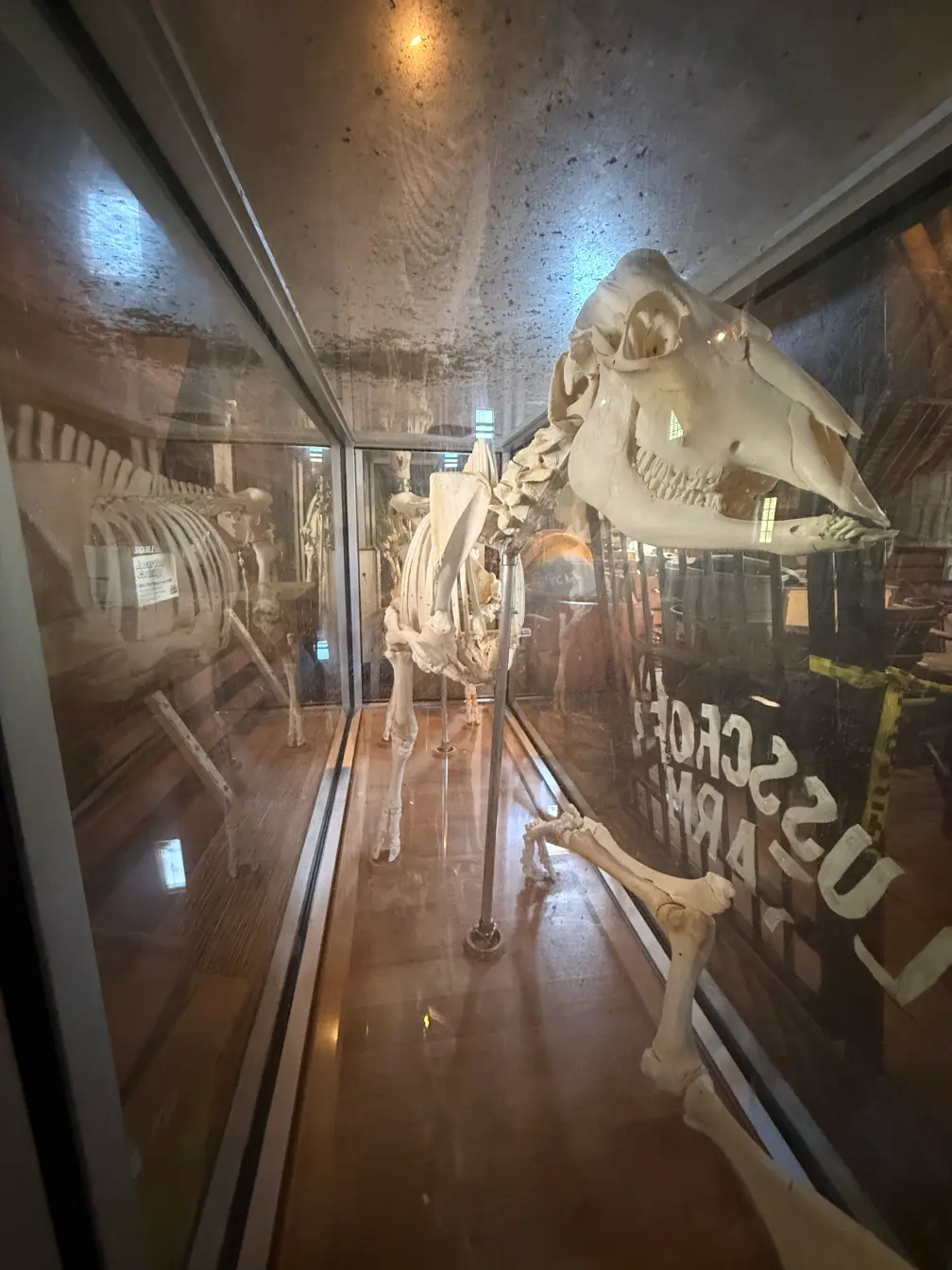
A horse skeleton:

Skeleton Horse

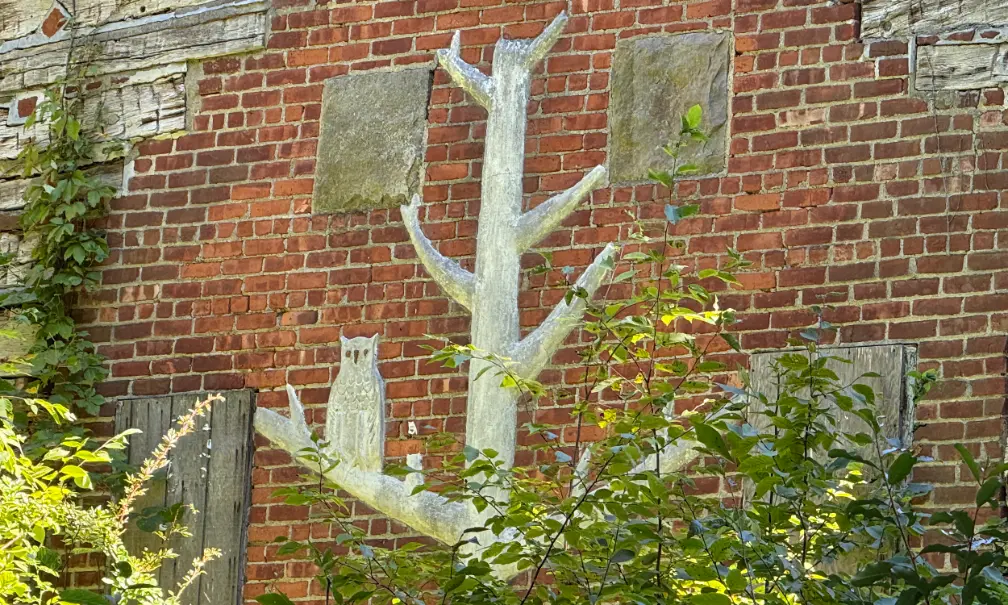
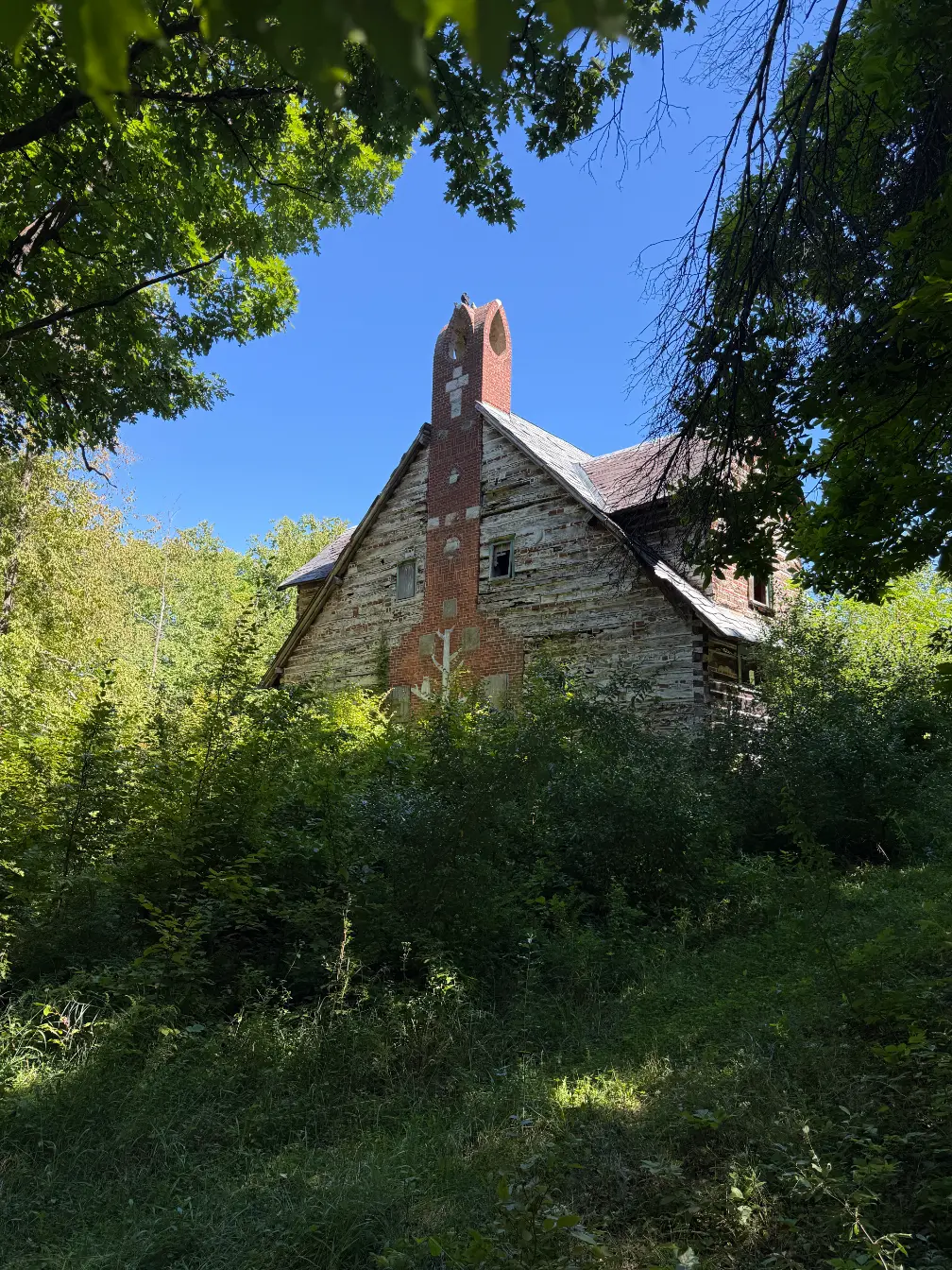
The grounds of the farm features many buildings aside from the barn — some restored, some decaying — a hidden lake, and many hiking trails that loop around the pastures, and wind up the mountain across the road from the barn. On the mountain (part of the Kittkatini Range, and Appalachian Mountains) the trails lead to several decaying but intriguing buildings like the “Spring House” and a larger home, swallowed by over-grown shrubs and trees, with a remarkable masonry owl decorating its side (and probably a live vulture on its chimney). The trails are often covered with grass and small forest plants (I don’t want to call them weeds) , occasionally rocky and punctuated with the occasional bear paw print. If you go wear long pants and sleeves to help prevent tick bits, keep your eyes peeled with critters large and small, don’t whistle at night or walk toward entities calling your name (Appalachian lore).
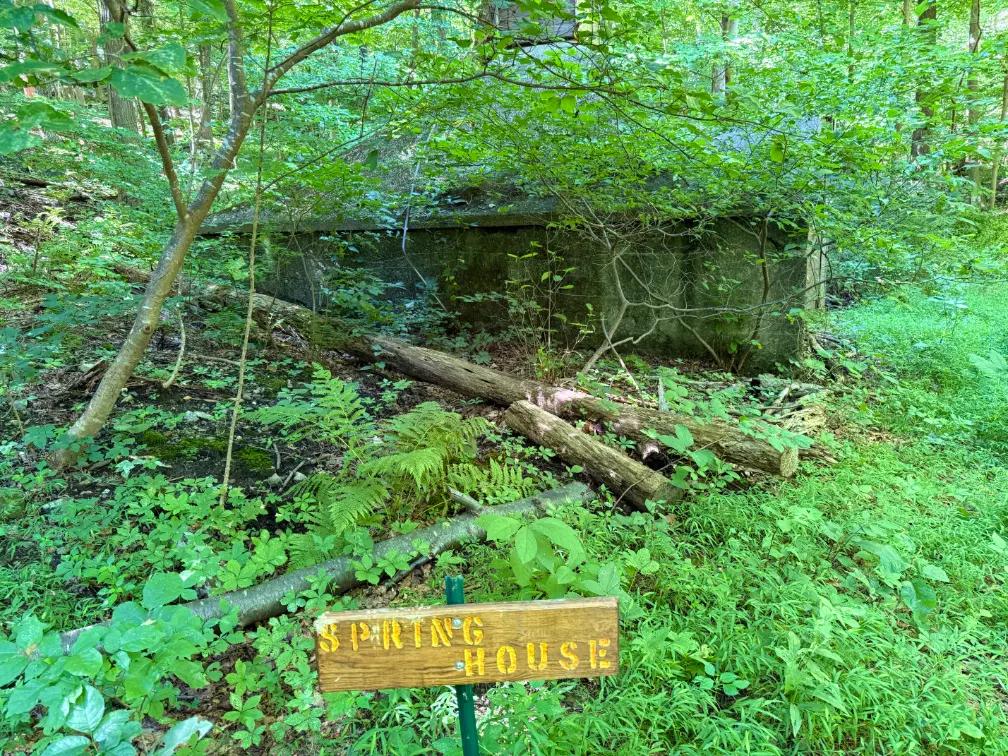
Spring House

Church of the Owl

The Owl Up Close

My ancestors came to America a little over a century ago. They were merchants, craftsmen, dressmakers, and laborers. They had small gardens, but they were not farmers. Other than a consumer of food, I have no cultural or ethnic connection to the classic North-East American farm. Still my mind lights up at the sight, sounds and even smells of a farm. The colors of a farm are all found in a basic box of eight crayons: leafy green, barn red, sky blue, sun yellow, earth brown, honey orange, thistle/eggplant purple and Holstein spot black for the lines that define it all. I treasure this farm, even if I have no farmer blood in my veins.

More information and events:
Skylands Museum of Art in Lafayette, New Jersey

Typically, if I’m in Sussex County, you’ll find me at The Sterling Hill Mining Museum to take a mine tour, The Franklin Mineral Museum to collect some glowing rocks, bucolic Lusscroft Farms for a hike, Vernon Brewing for a craft beer and a savory food truck meal, or Brick & Brew for a delicious burger. Maybe a visit to the Franklin Mineral Rock and History rock shop for a new rock. Maybe a visit to The Gingerbread Castle or the Stromatolites in Hamburg. Maybe a trip to the top of Route 23 to grab some tomatoes and a watermelon from the guy who has the fruit stand near the entrance to the quartz crystal collecting location. Maybe the 4-H Fair. Maybe a secluded lake for some peace and newts. There are plenty of ways to amuse yourself in Sussex County.

July 25, 2026 I was driving around looking for things to do between the things I already planned on doing. I tried the old “points of interest near me” search on Google Maps. At the top of the list was “Skylands Museum of Art“, the listing for which featured a giant purple cicada sculpture. That is all I needed to see! I already wrote about this museum on the cicada blog Two Cicada Sculptures at Skylands Museum of Art, but there is more to the museum than cicadas, so I will cover the rest here.

The museum includes both a building and a sculpture garden. Inside the building you’ll find three immaculate, well-lit floors of framed art and sculptures. It has the vibe of a large Colonia Revival house that was converted into a home for artwork. Many of the sculptures were by an artist named Ailene Fields, carved from stone and other media including skull-bird houses, abstract but meaningful masses, and whimsical animals.

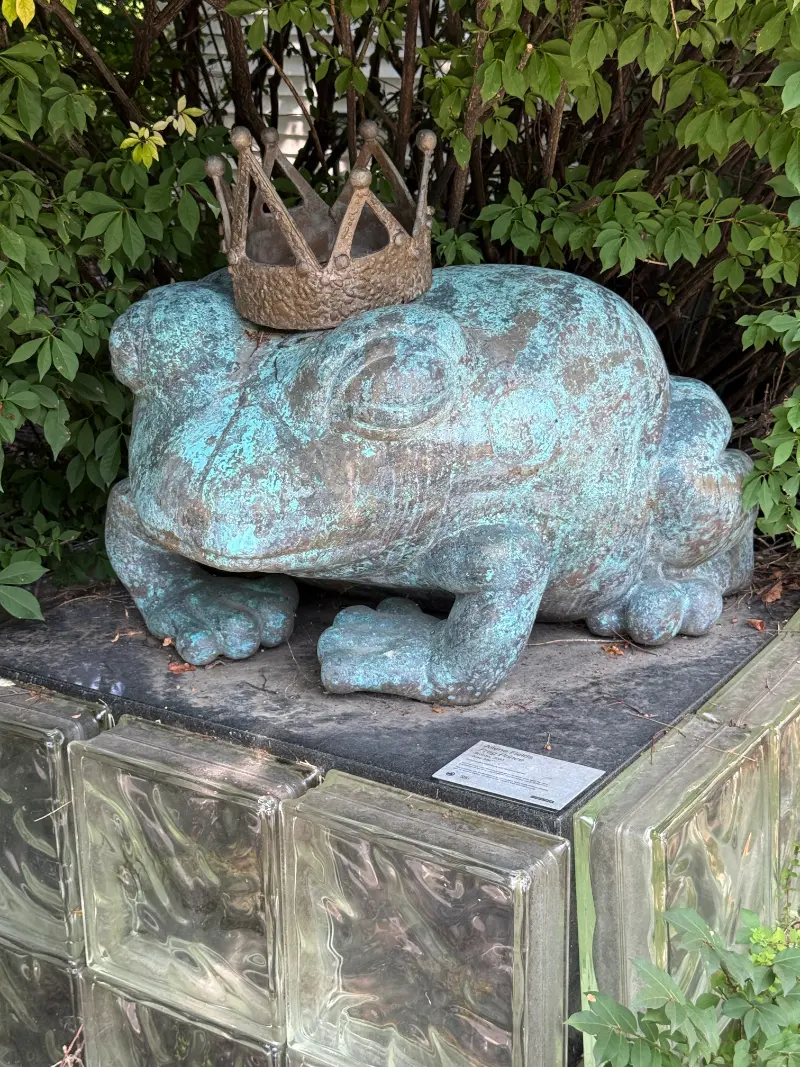
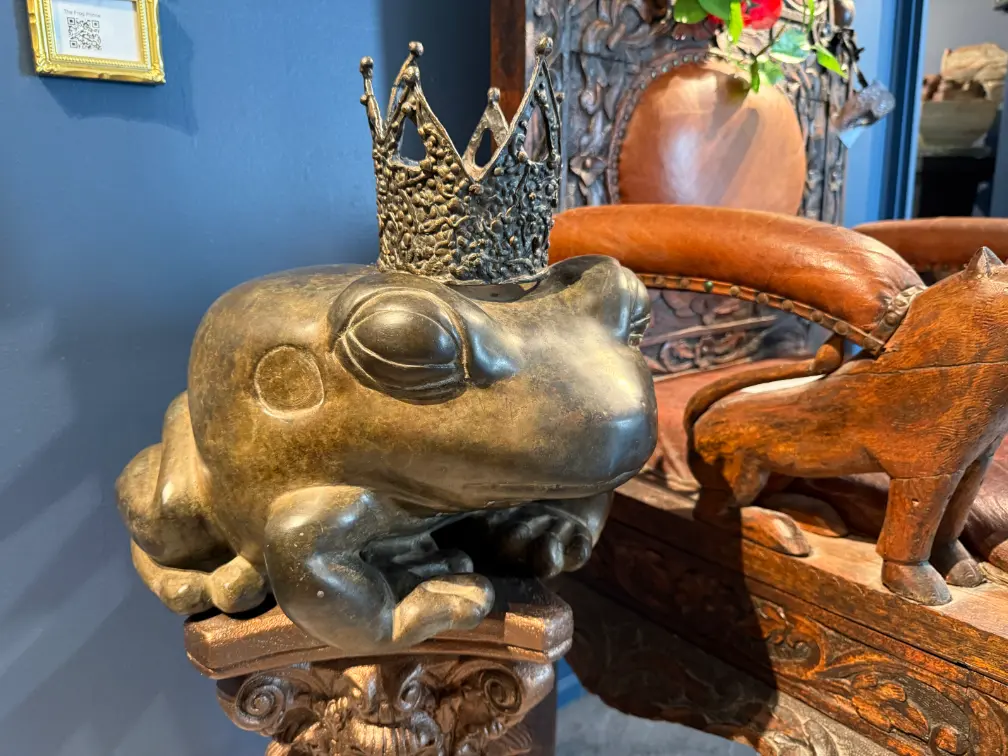
A royal frog (by Ailene Fields):
Frog King

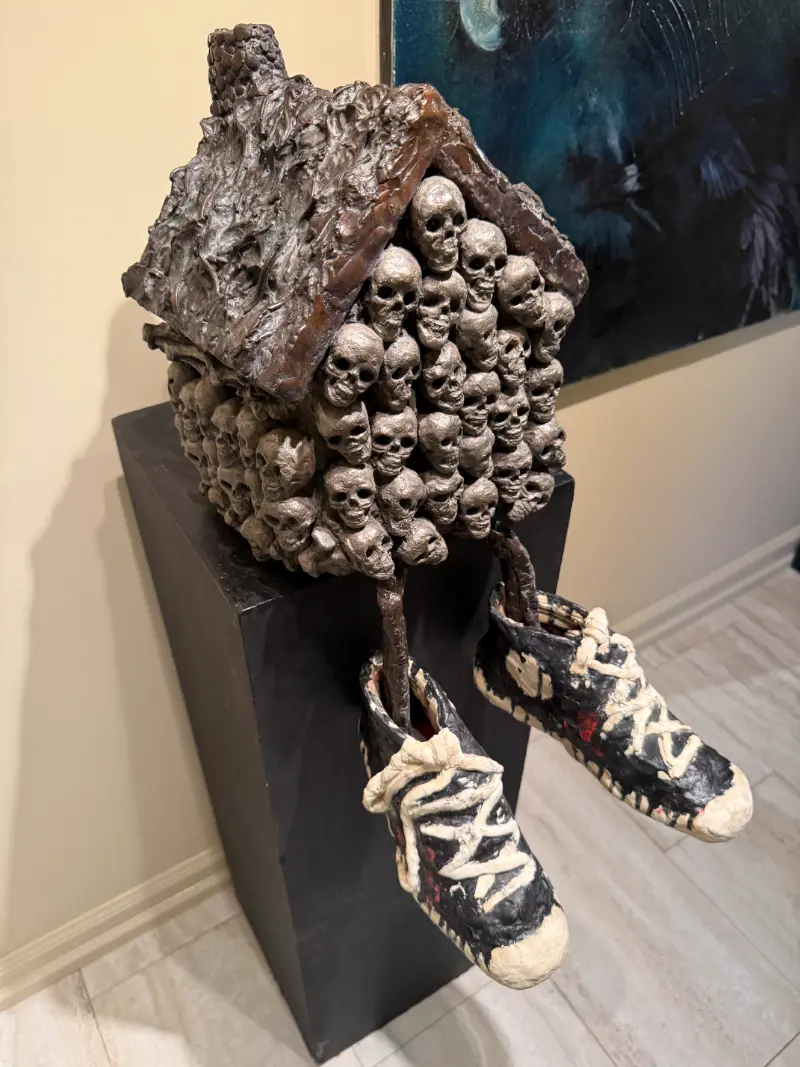
A skull house with sneakers (by Ailene Fields):
Skull House with Sneakers

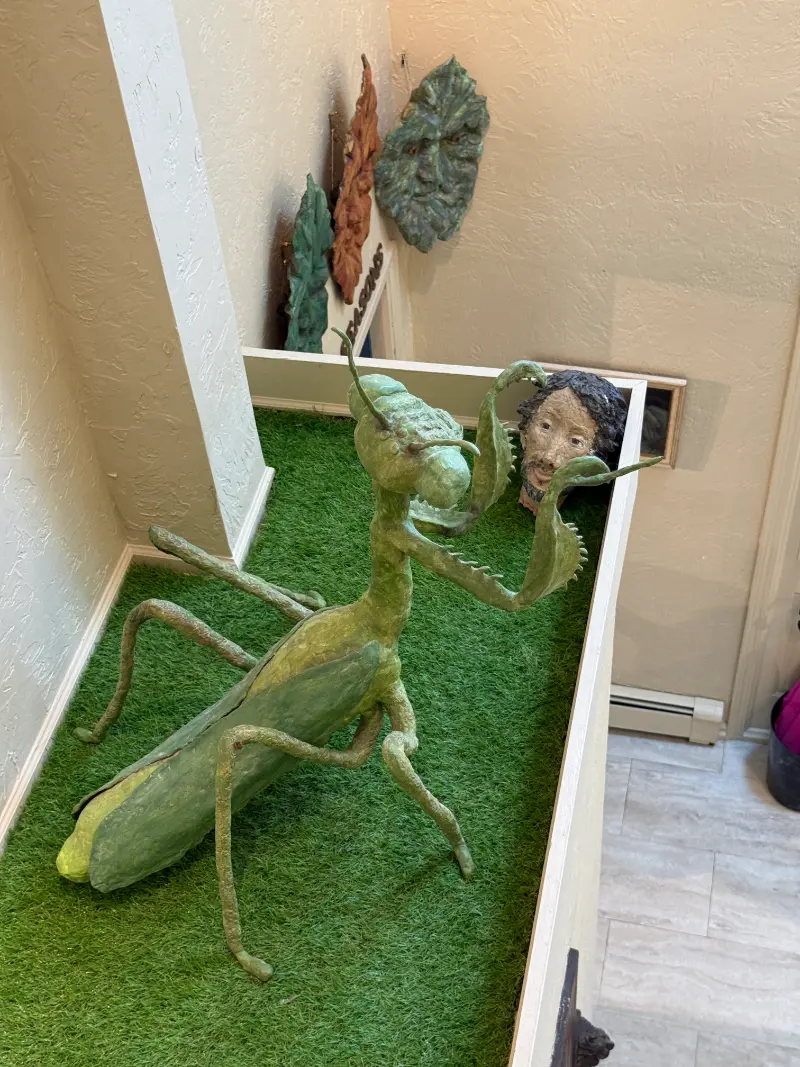
A mantis with human prey:
Mantis and Man Head

I relaxed on a bench surrounded by the visuals and sounds of art and nature — a welcome break from a day of driving.

Another Royal Frog (Ailene Fields):
Frog at the entrance

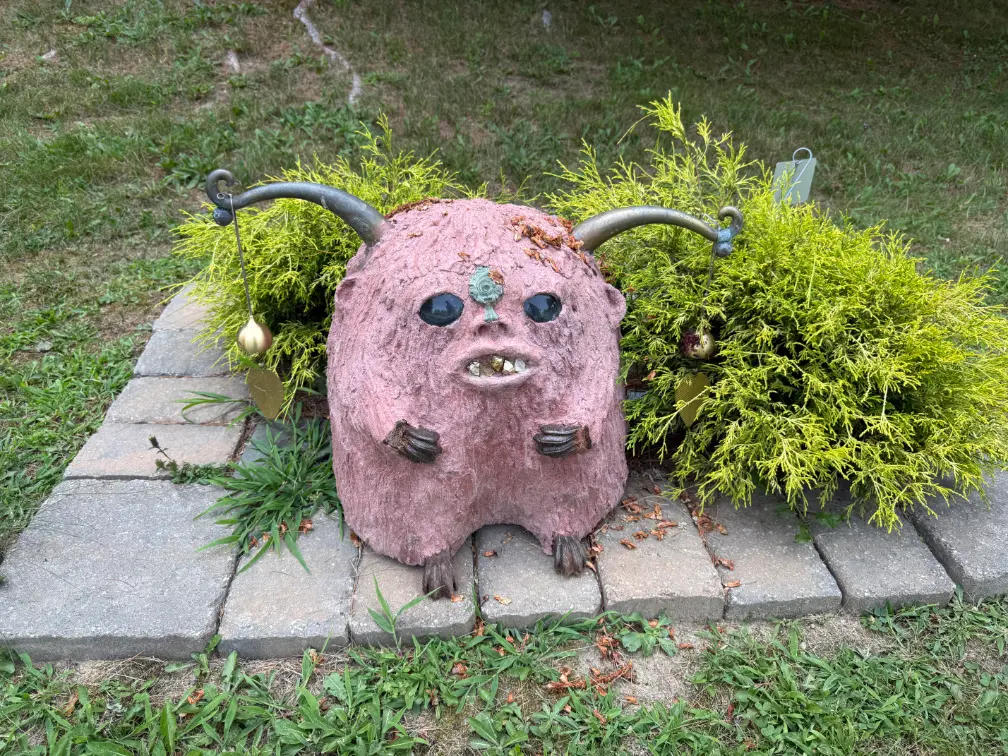
A wonderful little creature:
SAY HELLO TO MY LITTLE FRIEND

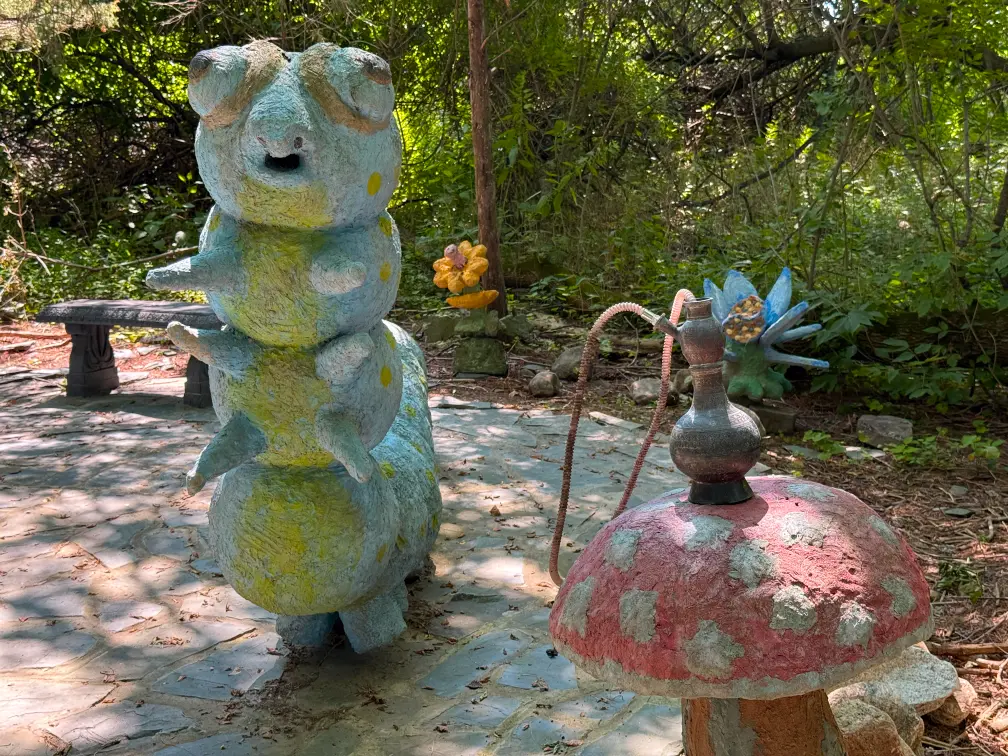
The caterpillar from Alice in Wonderland:
caterpilliar vape

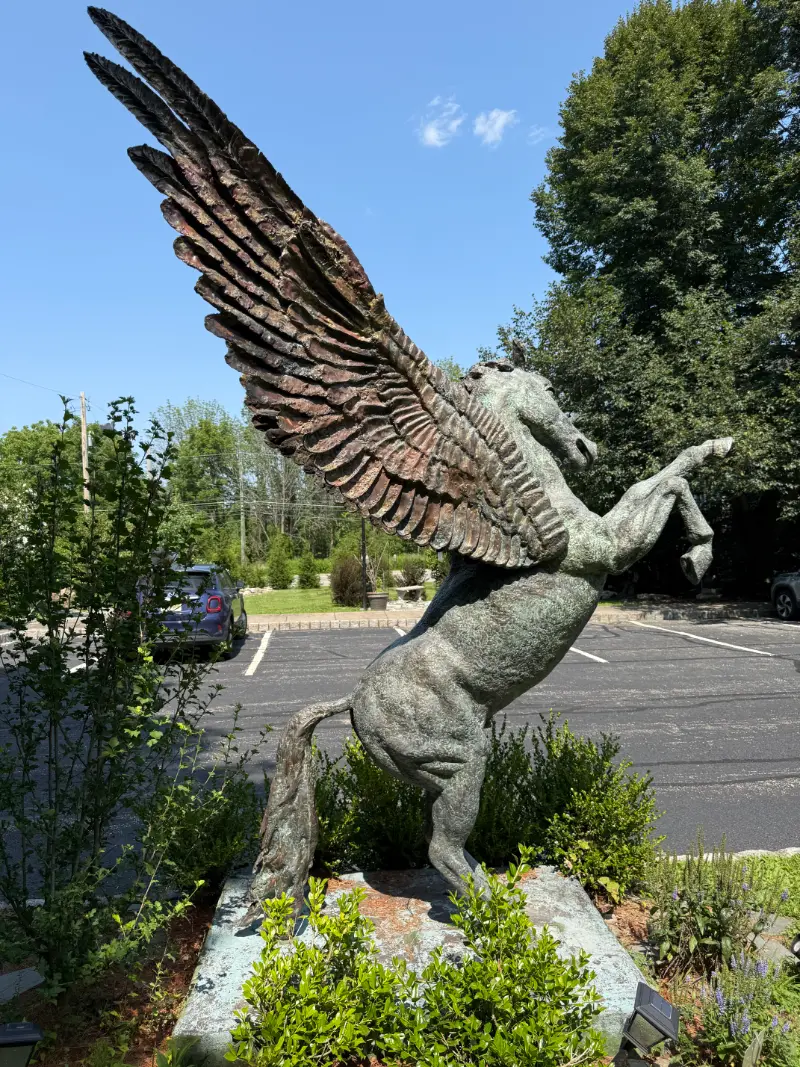
Pegasus (David Klass):
pegasus

If you’re in Sussex County and need a break from the concrete world of zinc mines and burgers, visit the Skylands Museum of Art for some fantasy and reflection.

Sterling Hill Mining Museum at Night!

Previously, I wrote about The Sterling Hill Mining Museum (Ogdensburg, NJ). Since then, I’ve been back about a dozen times, and the place is still a marvel to me.

The museum, on occasion, has night events like night digs or Halloween mine tours. I was lucky enough to visit at night during a local Mineralogical Society meeting.

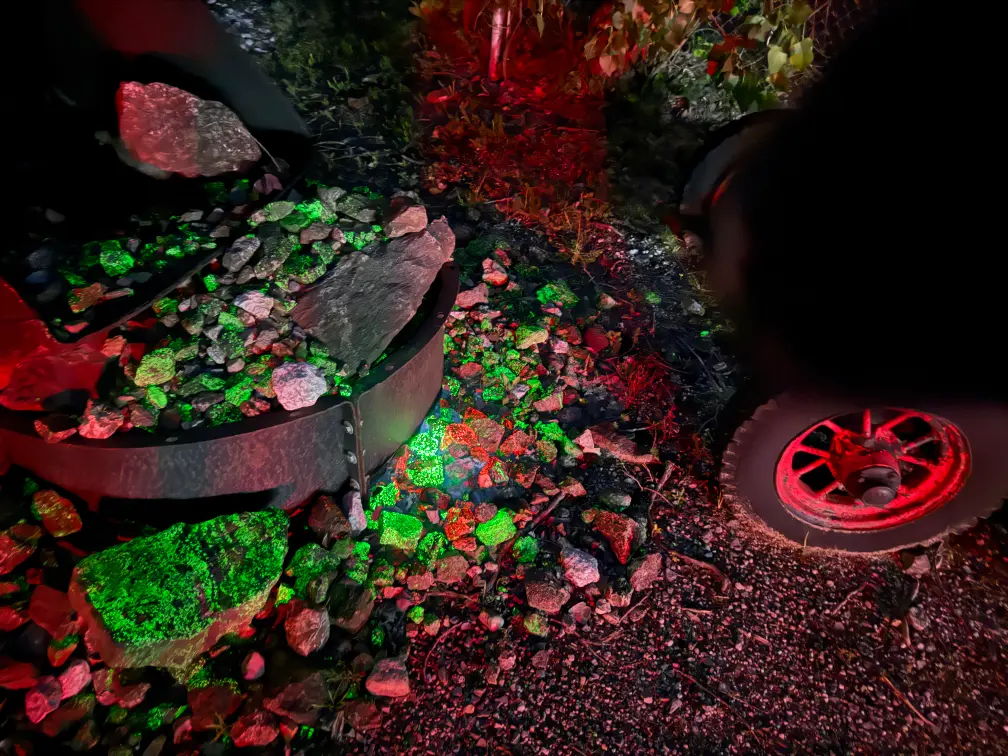
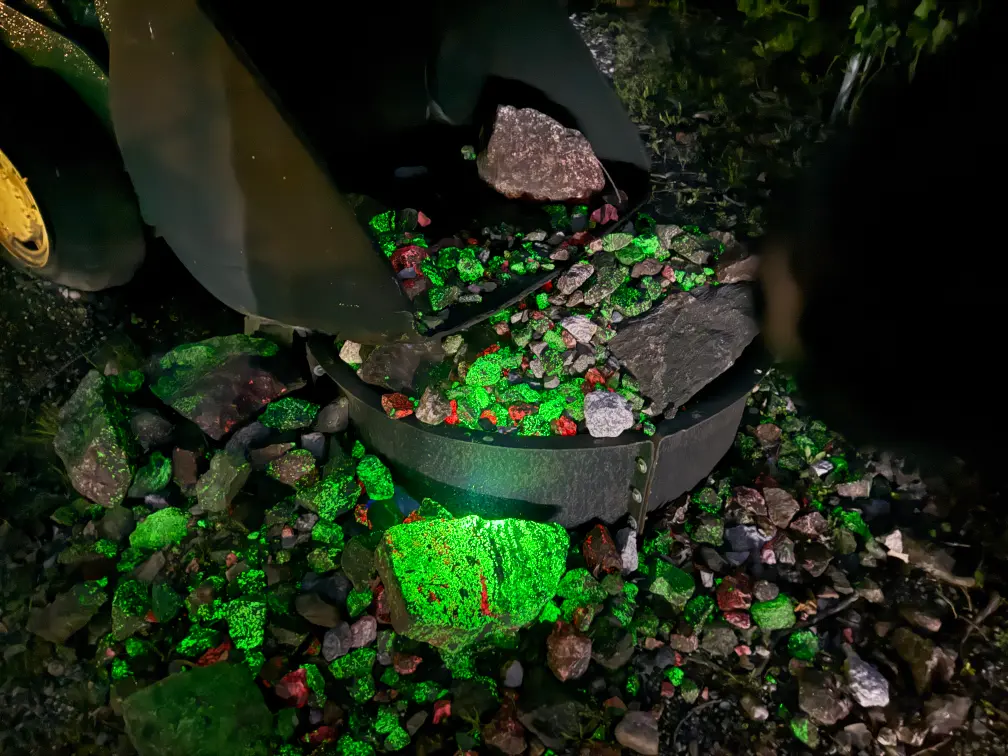
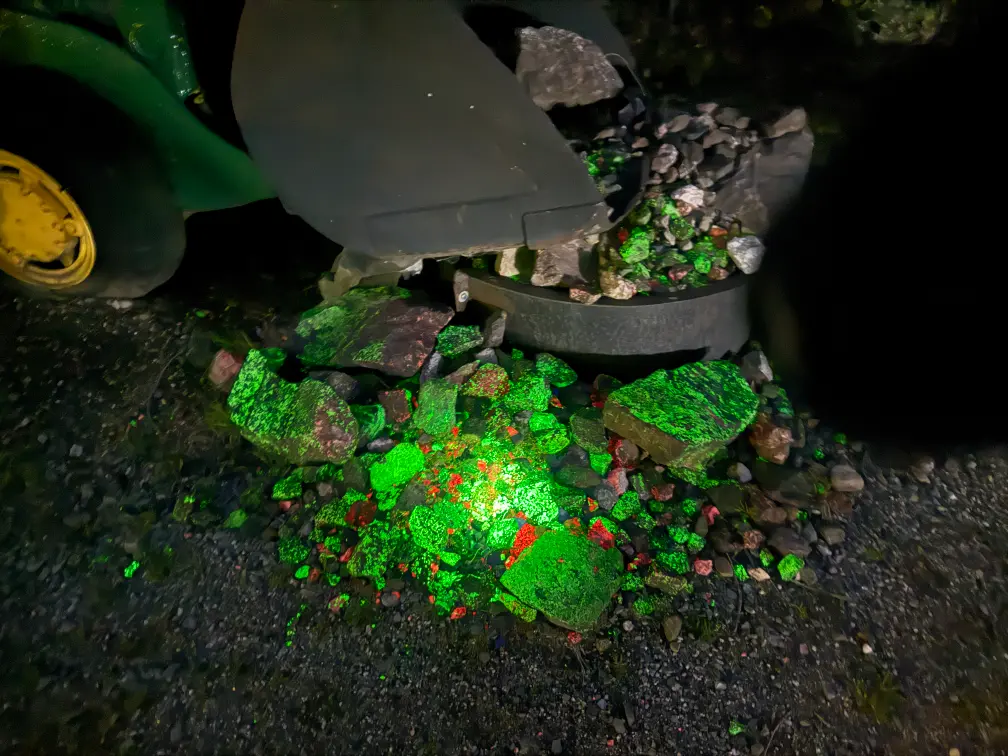
Rocks glowing under a 255nm UV light. The green color is the mineral Willemite and red is Calcite. These rocks were grouped in piles around the grounds of the museum, which features many examples of mining equipment and ore.
Glowing rocks

Even More Glowing Rocks

More Glowing Rocks

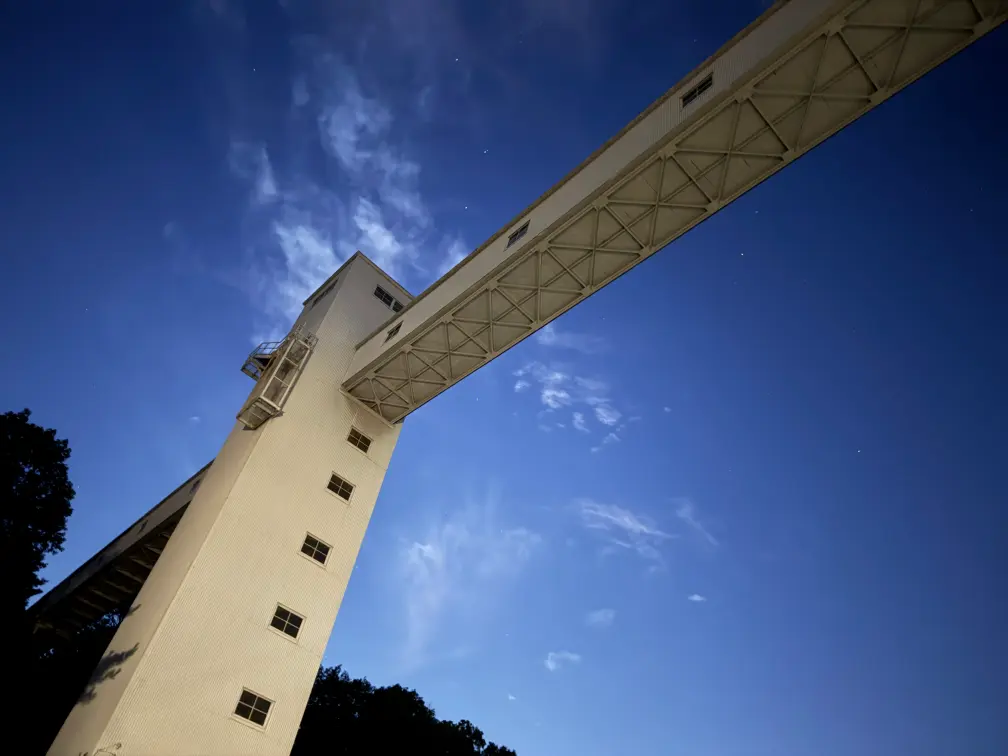
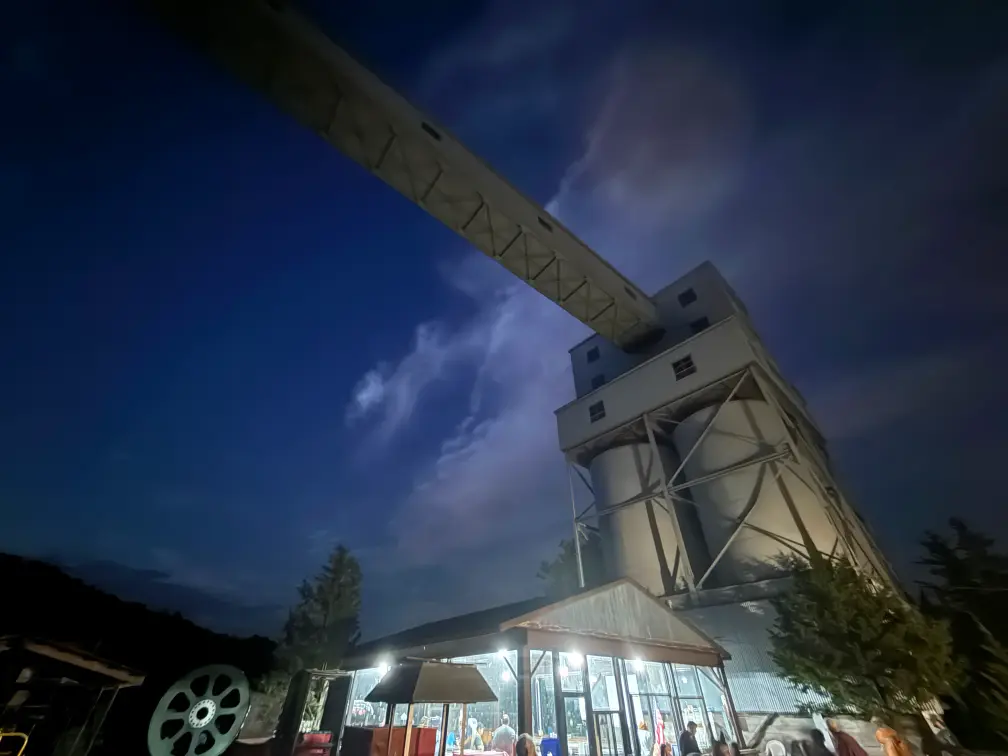
These are photos of the huge building that housed the mechanism that carried ore from the mine to waiting trucks (maybe trains) to take it away. Awe inspiring.
Sterling Hill at Night view 2

Sterling Hill at Night

Visit Sterling Hill and join a local Mineralogy club.

Learn more:

Big Rusty the Troll in Hainesport, New Jersey

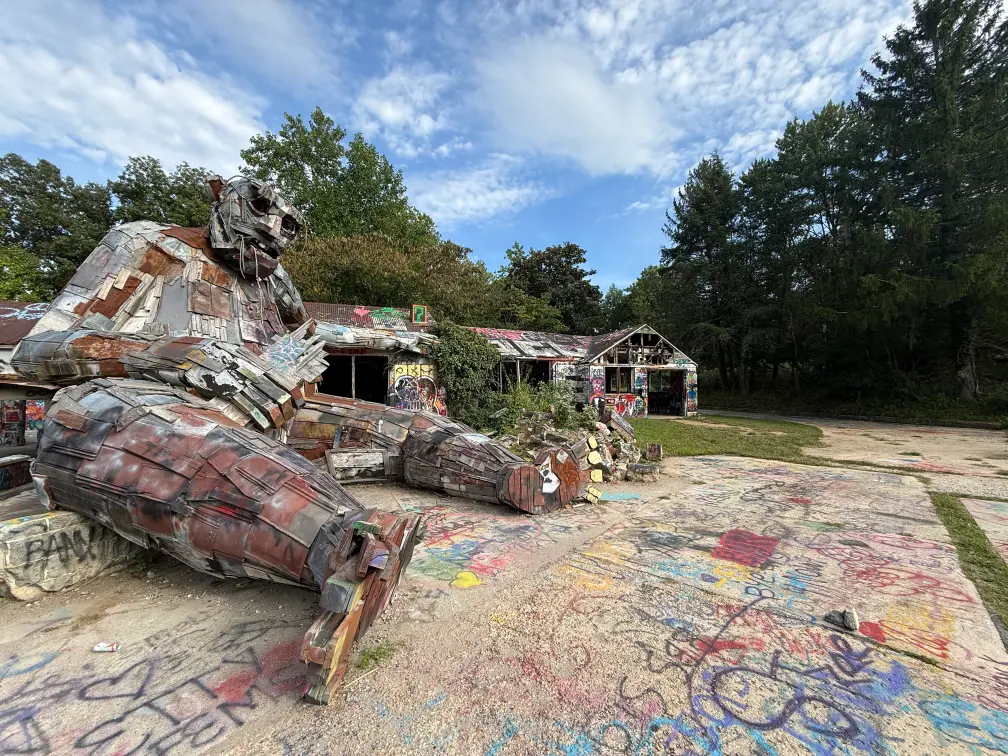
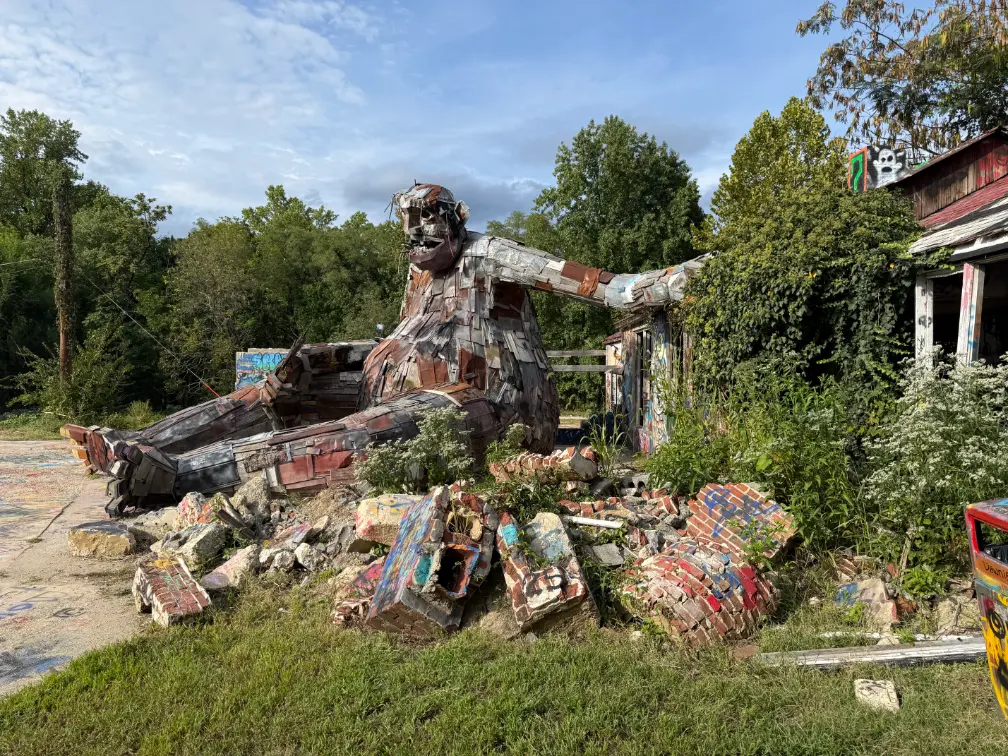
I was exploring South Jersey, looking for tomato pies and cheesesteaks, when something unique appeared on my radar: Big Rusty the Troll. I heard of Big Rusty before — maybe hundreds of times on Instagram — but I never paid the great troll a visit until September 12th, 2026. Big Rusty is one of dozens of massive troll sculptures created by artist Thomas Dambo created using discarded wood, metal, wire and other media. (You can use the Troll Finder to find a troll in your neck of the woods.)

Like most people I used Google Maps to find Big Rusty. I pulled onto the road where Rusty lives (a dirt road at 1404 NJ-38, Hainesport), and I was immediately confused. There were No Trespassing signs along the rocky road, so I parked my car at the entrance and walked in. At the end of the road is a flat parking area, with plenty of cars and people, and an abandoned building with every door and window removed and every frame, floor, wire and wall coated with graffiti. Guarding the building was Big Rusty. I was ready to pay a toll, but none was required.

Welcome to Big Rusty’s world:
Big Rusty's Place

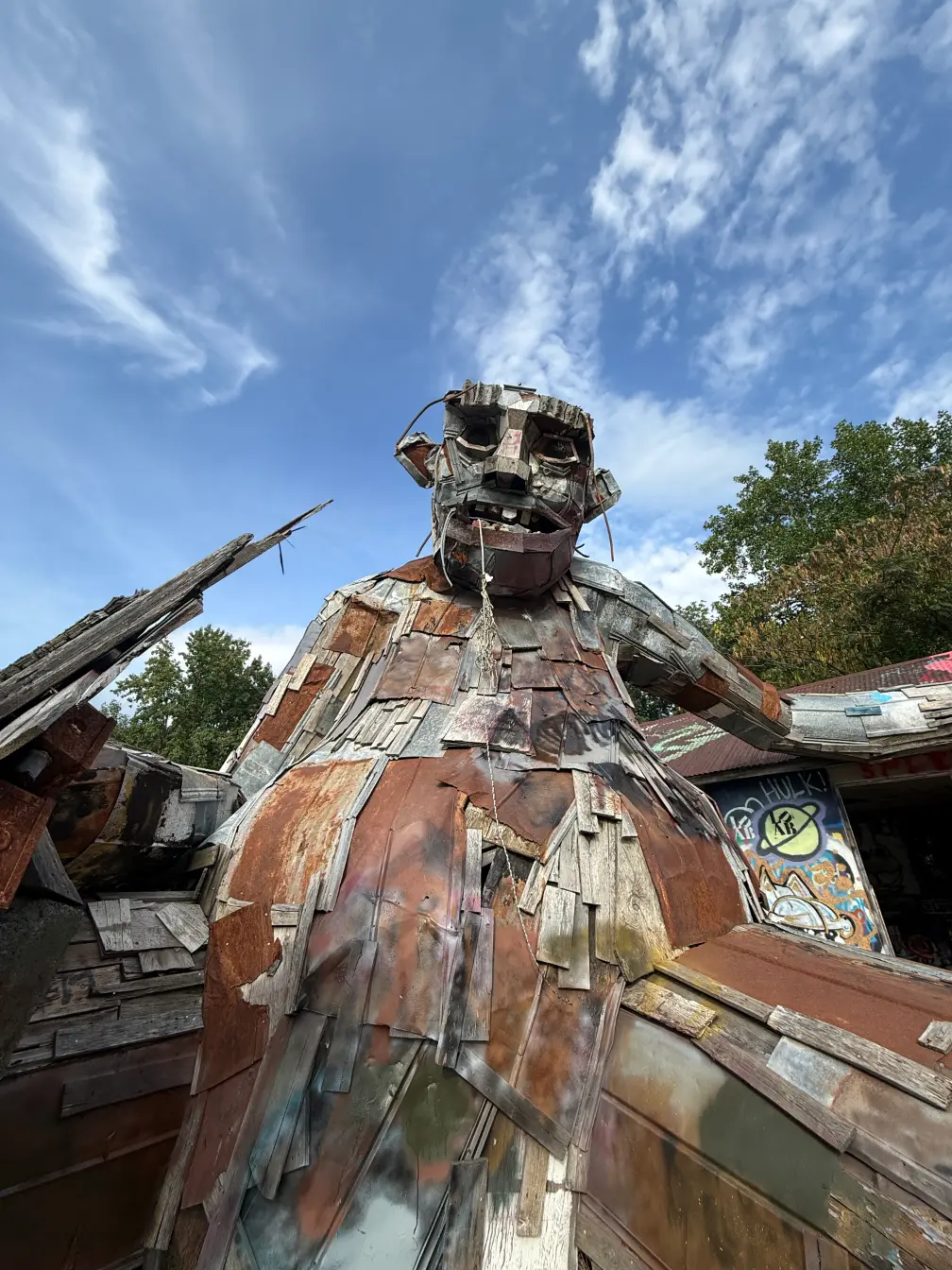
Up close and personal:
Big Rusty Upclose

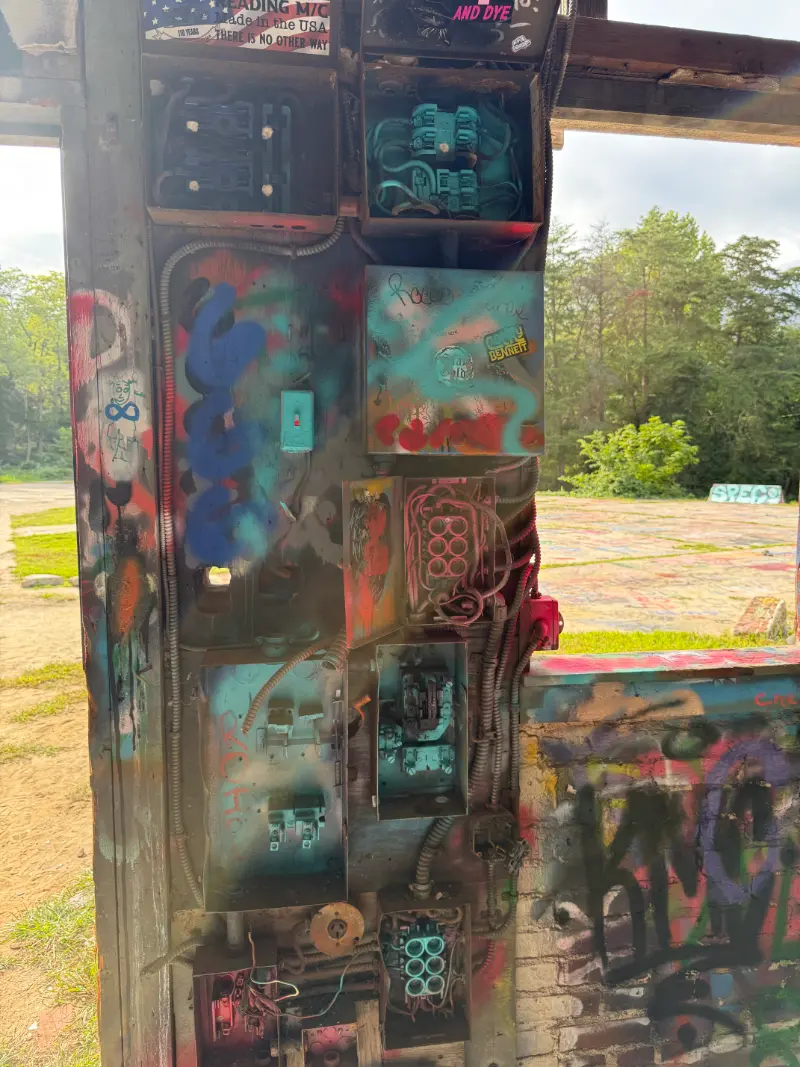
Every millimeter of Rusty’s lair is covered with squiggles and slashes of graffiti:
Graffiti

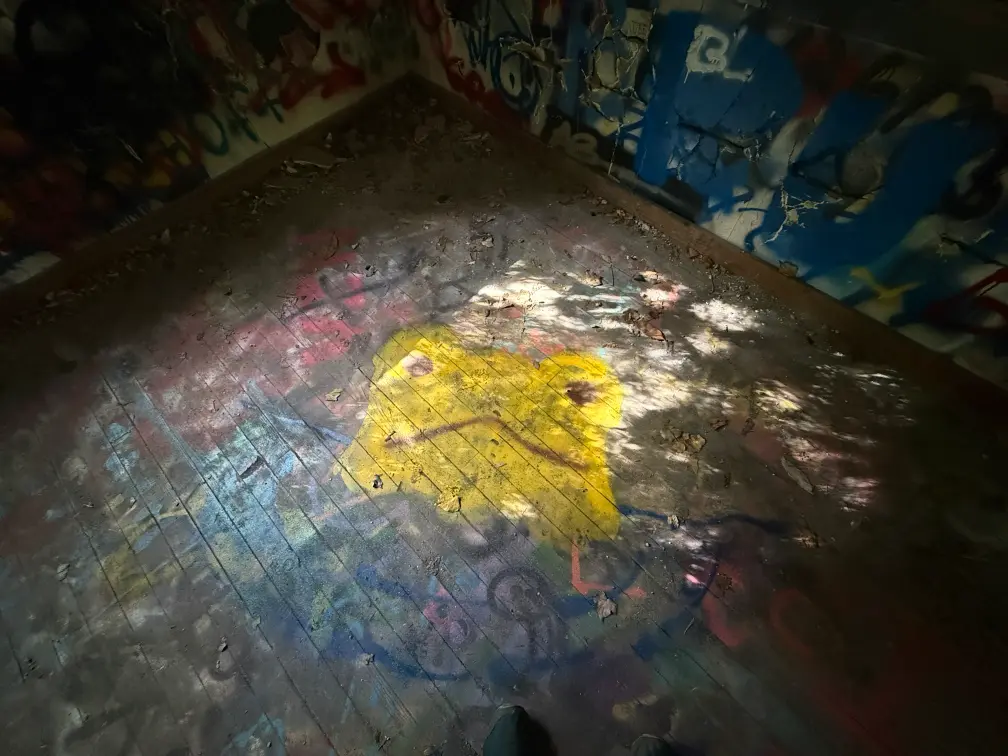
Fantastic Floor Frog:
Floor Frog

Big Rusty is truly a sight to behold and experience. He looks like he came to life, magically, spontaneously assembled from boards and metal sheets from the building he guards. I need to read more about sculptor Thomas Dambo and Rust’s lore (if lore exists). He is a New Jersey “must visit”, and he fits right in with Jersey’s other Giants like Muffler Men, Mighty Joe Young (on rt. 206), and Margate’s Lucy the Elephant. Don’t stare too long at the photos in this article — go experience Rusty for yourself.

Rusty leaning on his home:
From the side

Rusty is a short drive away from Gary’s Gem Garden, which is the best rock and mineral store in New Jersey (that I know of).

The Dickerson Mine Preserve in Mine Hill Township, New Jersey

New Jersey was renowned for its iron mines. Mine Hill Township, New Jersey, is loaded with the remnants of old iron mines. The Dickerson Mine Preserve, located in Ferro Mont, in Mine Hill Township offers many hilly trails for bicyclists and hikers alike to explore, with plenty of trees, mushrooms, deer, brooks, and swampland to observe. Most of the preserve is canopied by deciduous trees and the forest floor is mostly bare, typical of an area with heavy deer grazing. What brought me to the preserve was its iron mining history, and for sure there is plenty to see. I saw dozens of pits, tailing piles of ultra-mafic ore, scatterings of slag (glows orange in UV), coal (used to process ore), and stone walls, that could have been property lines or walls of buildings. It is like an outdoor mining museum. I in the tailing piles I observed hunks of quartz as big as my forearm, apatite-speckled magnetite, and rocks with crystalline quartz, feldspar, apatite (glows pink in UV), magnetite, biotite, hornblende, and titanite. The very best ore must have gone to a forge, but there is left plenty to behold and document. There are several mines in the park, including: BAKER NO 1 MINE (1863-1891), BAKER MINE LOWER HILL (1868-1883), CANFIELD MINE (1873), COW-BELLY VEIN (1713-1883), BLACK HILLS MINE (1879-1900), and KING MINE (1853-1880). There are many other mines in the neighborhoods surrounding the preserve as well, like the Canfield Phosphate Mine.

I entered the park at the Dickerson Mine Preserve Parking area on Frank Street in Mine Hill.

The well-worn trail into the park was festooned with all sorts of small rocks, including tiny glacial erratics, ore and slag — a good sign of things to come.

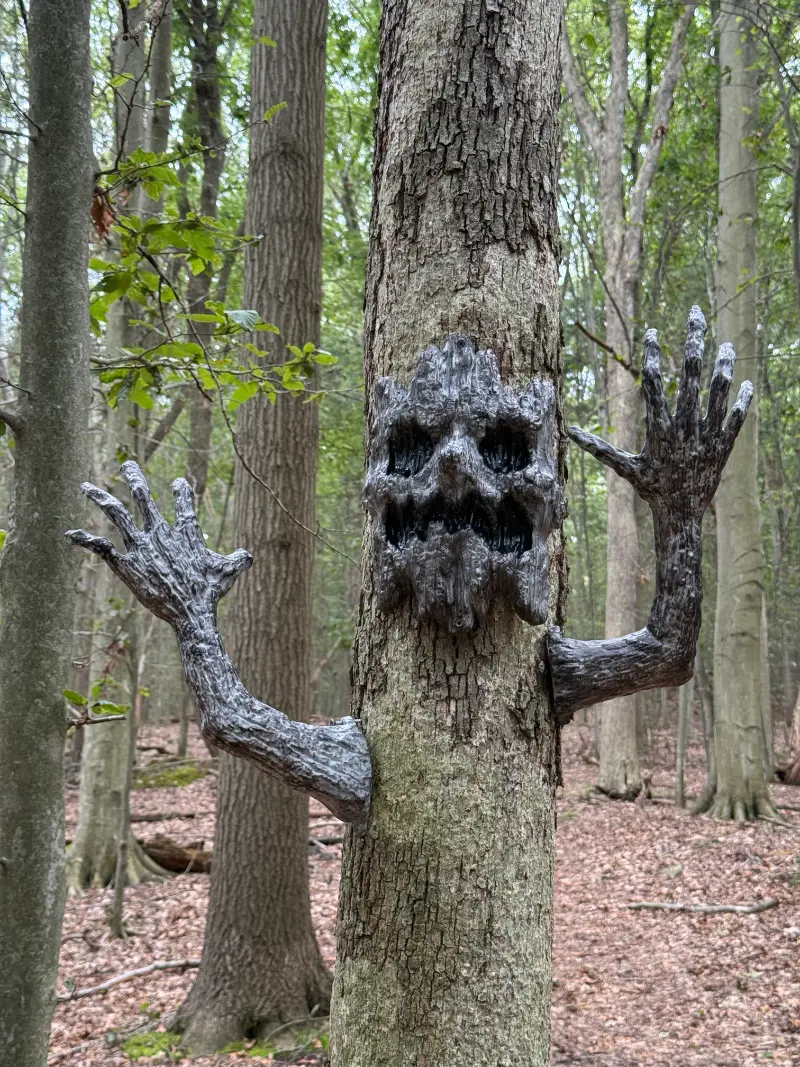
Near the top of the entrance trail, I was greeted by this anthropomorphic tree. Like something from the Wizard of OZ.
Dickerson Mine Preserve Ghoul

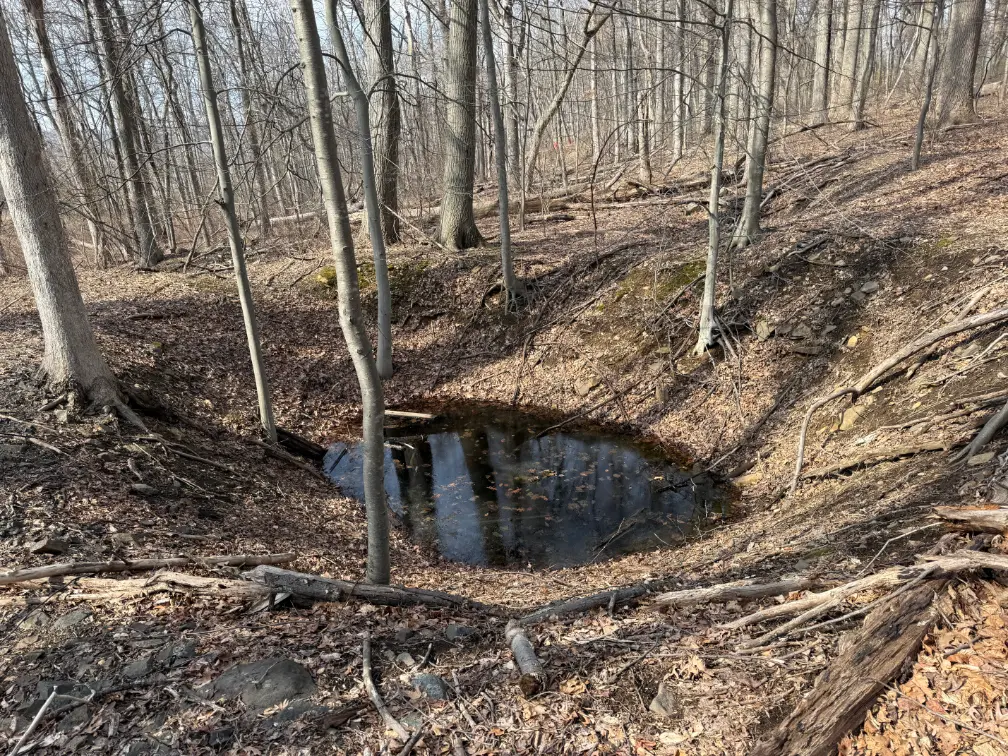
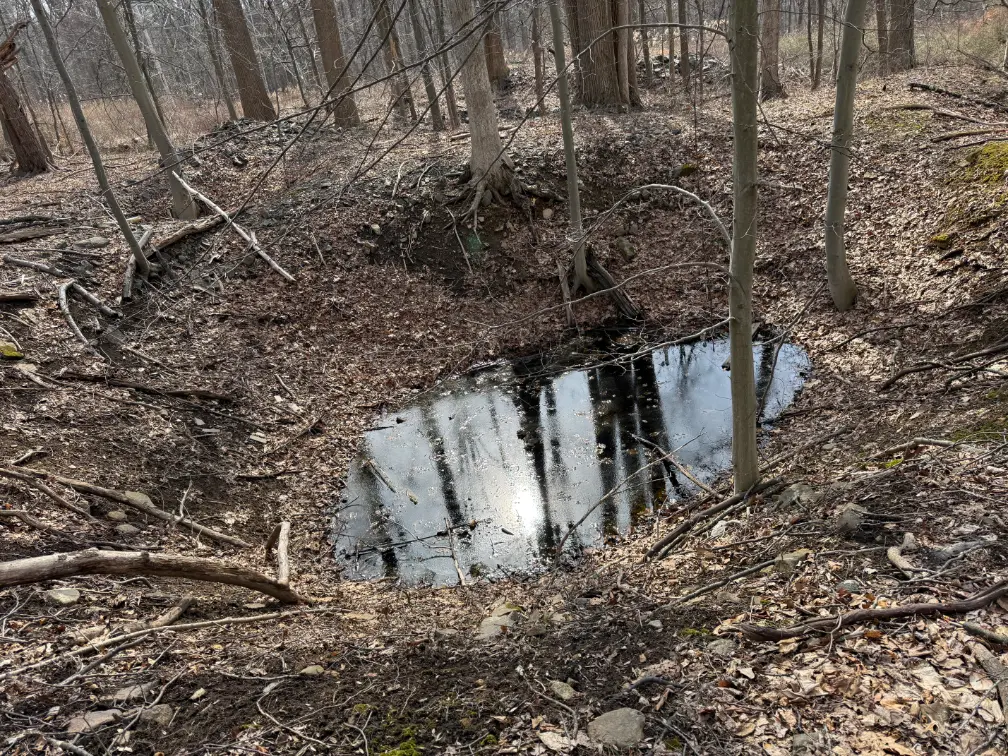
The park is pockmarked with dozens of pits, some filled with water, most filled with debris. I was careful not to slip into one of these pits — no telling how deep they go!

Dickerson preserve pit

Dickerson preserve pit

The park has many trails, some designed specifically for the enjoyment of bicyclists featuring hair-pin turns, and jumps made of tailing piles and brown earth. There are huge tailing piles everywhere, with watermelon-sized rock covered with green lichens. Folks I met, including the bikers, hikers and local experts, were all polite, kind and chatty if you engage them. If you go, make sure to wear long pants and a shirt with long sleeves to protect against ticks. You will get your shoes wet in muddy places, so be prepared for that.

If you take a trail to the left, down a hill, over a brook and across the clear-cut area for tight-tension electric wires, you’ll get to the Baker Mines, which are most impressive.

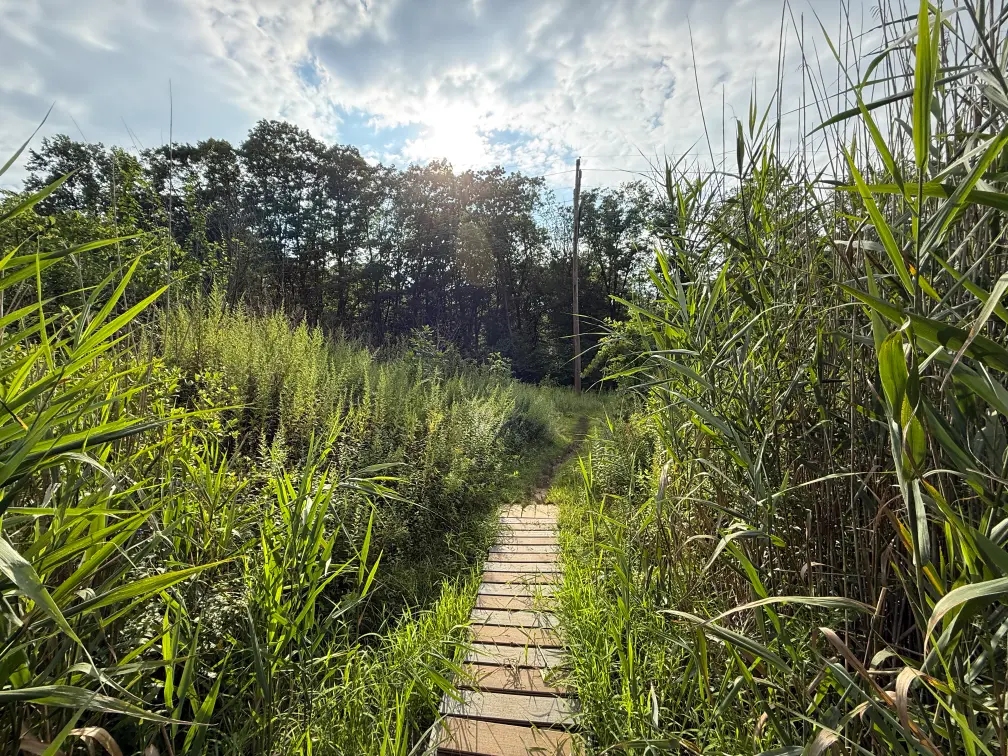
A wood-plank path through the swampy, weedy high-tension wire area:
Swampy field

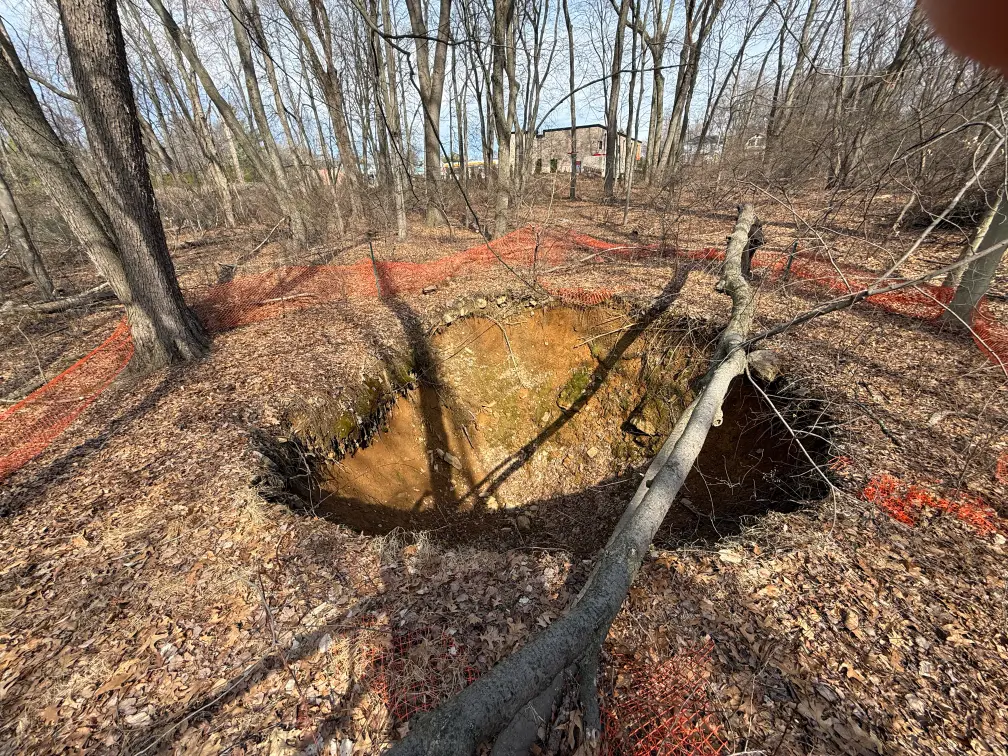
This pit, that could swallow a bus, is the entrance to the BAKER NO 1 MINE. It is located behind the Dunkin Donuts on Rt. 46.
BAKER NO 1 MINE

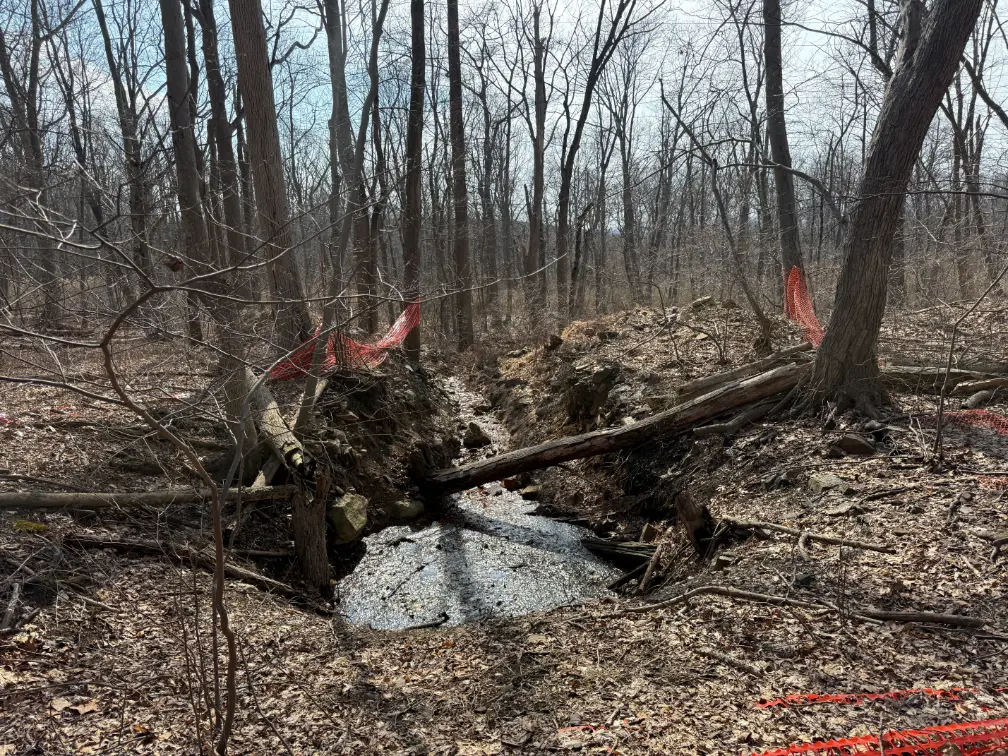
A short walk away is what appears to be an adit to the BAKER MINE LOWER HILL. It looks like a gorge that drains water from the mine.
BAKER NO 1 MINE adit?

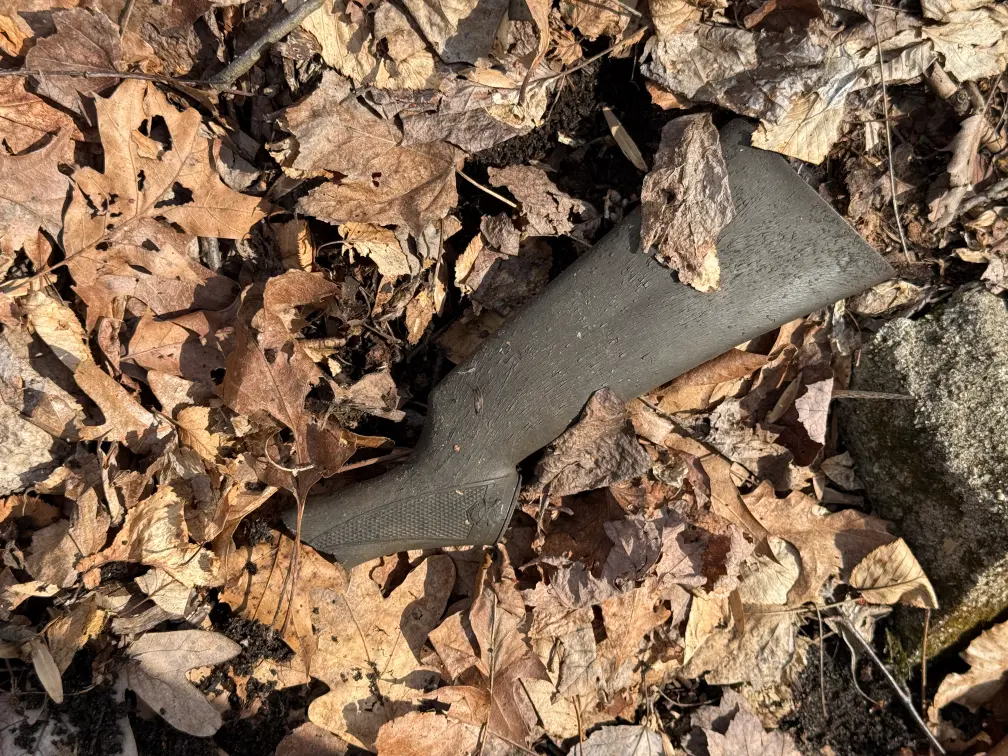
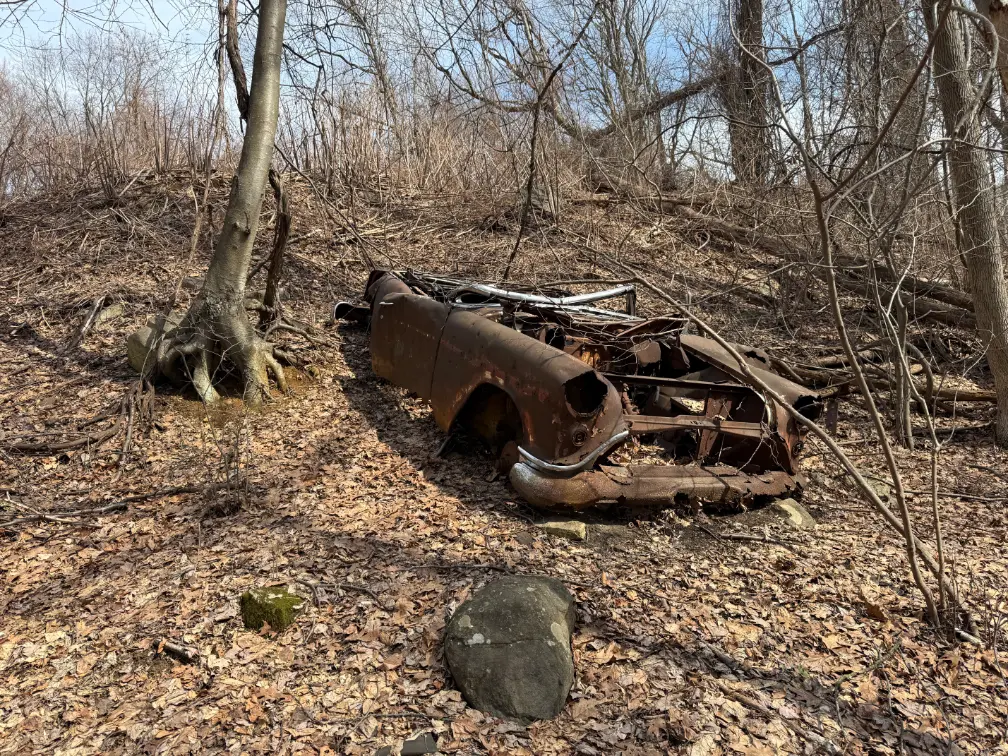
There are plenty of human artifacts not related to mining, like gun stocks and rusting, abandoned cars:
Gun Stock

Abandoned Car

The Dickerson Mine Preserve is excellent for biking, hiking, exploring Morris County nature, and particularly wonderful if you like geology, mining, mushroom photography, and observing the effects deer feeding can have to a deciduous forest in the absence of predators.

Resources:
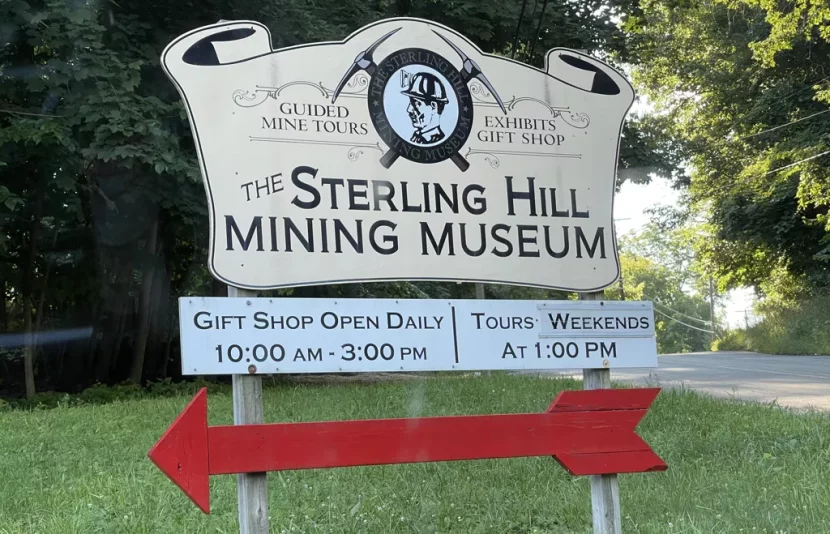
The Sterling Hill Mining Museum

The Sterling Hill Mining Museum (Ogdensburg, NJ)

The Sterling Hill Mining Museum, located in Ogdensburg, New Jersey, offers visitors a tour of an old zinc mine, a large mining and mineral museum, and an opportunity to collect fluorescent minerals from a dump of rocks left over from mining operations. If you have an interest in mining, geology, rock collecting, or New Jersey history, it is worth a visit. Ogdensburg, and Franklin to its north, are internationally known for the variety of fluorescent minerals and the New Jersey state mineral Franklinite, which is a non-fluorescent zinc ore.

Note the variety of colors found in the rocks a the bottom of this photo. Even in daylight, these massive rocks are colorful — under a shortwave UV light, even more so.

The Sterling Hill Mining Museum

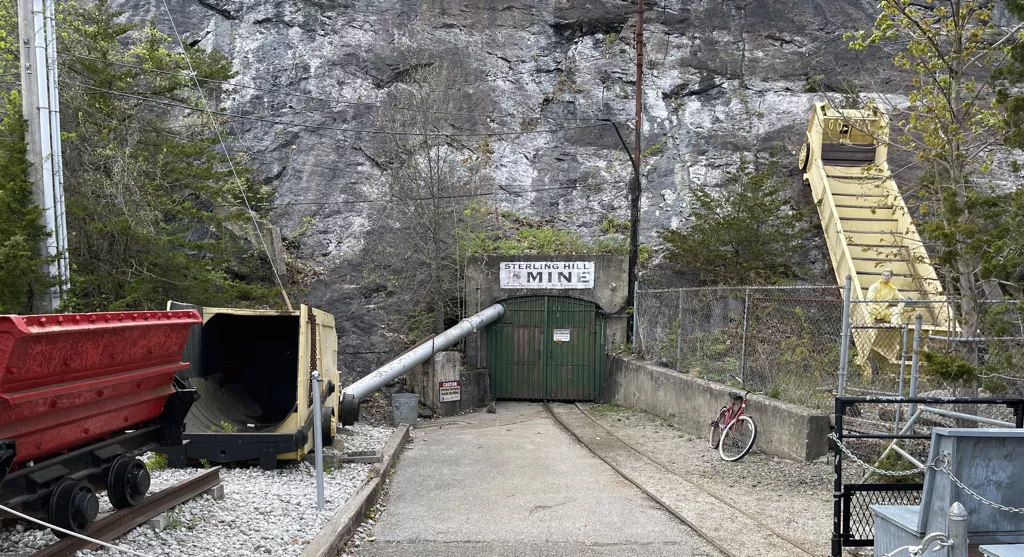
Entrance to the mine

One of the entrances to the mine is on the side of the mountain. The mountain is named Sterling Hill. The rock on the face of the mountain is mangano calcite, that weathers brown, but fluoresces red.

The Sterling Hill Mining Museum

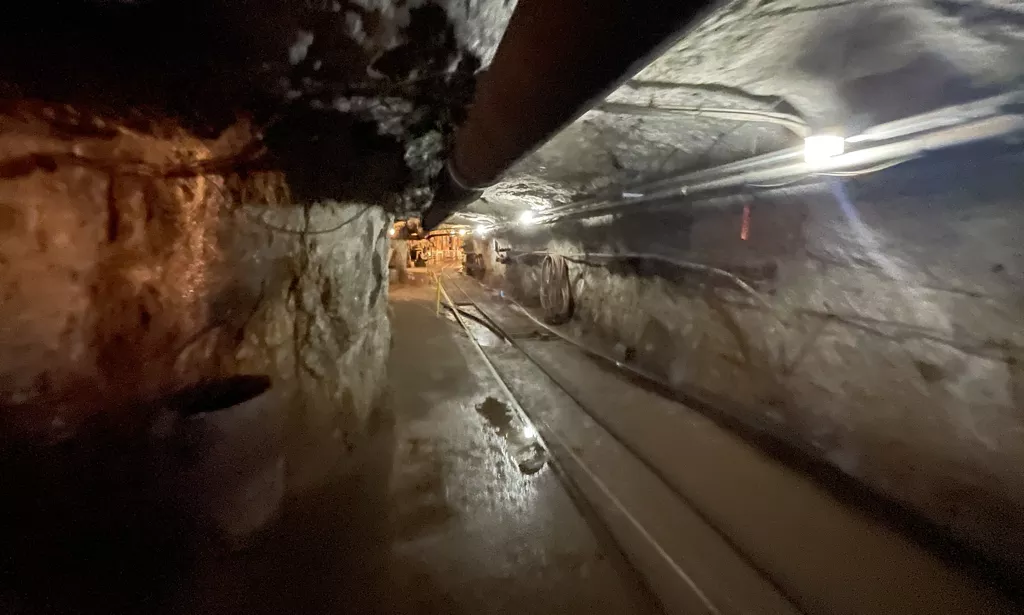
Inside the mine

The mine is a half-mile deep, but it is mostly filled with water. The tour guide takes you only through the top levels of the mine. There is no danger of falling to lower levels and drowning. But just imagine falling into a pool of water as deep as the Empire State Building in total darkness — not that’s a horror movie!

The Sterling Hill Mining Museum

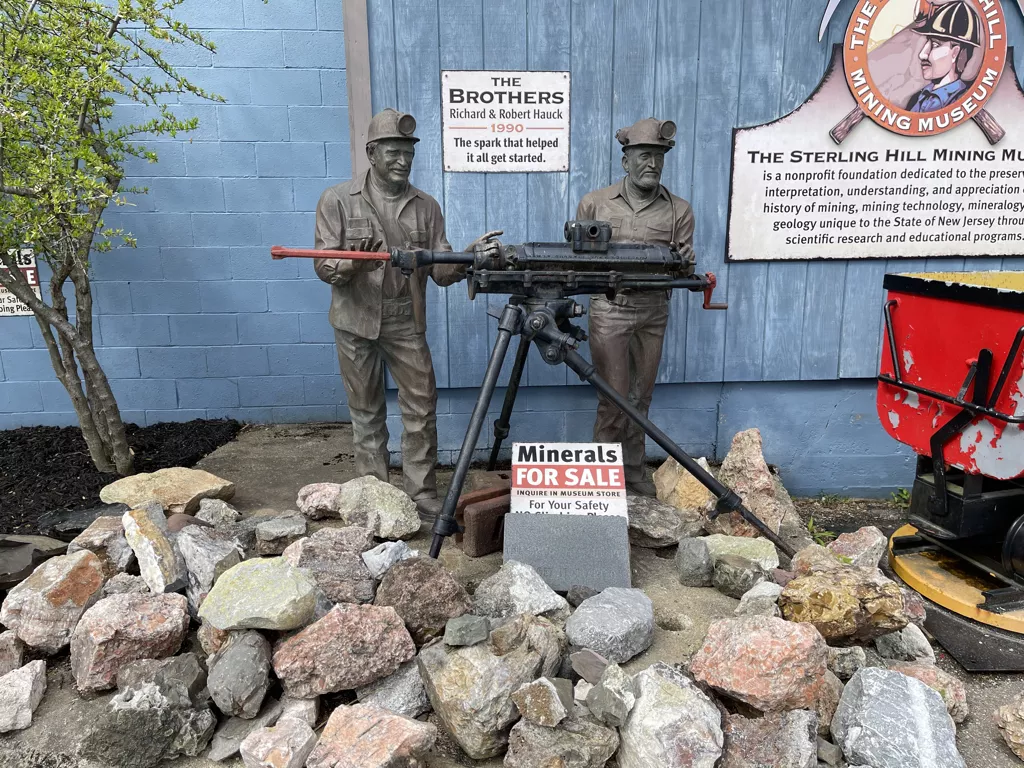
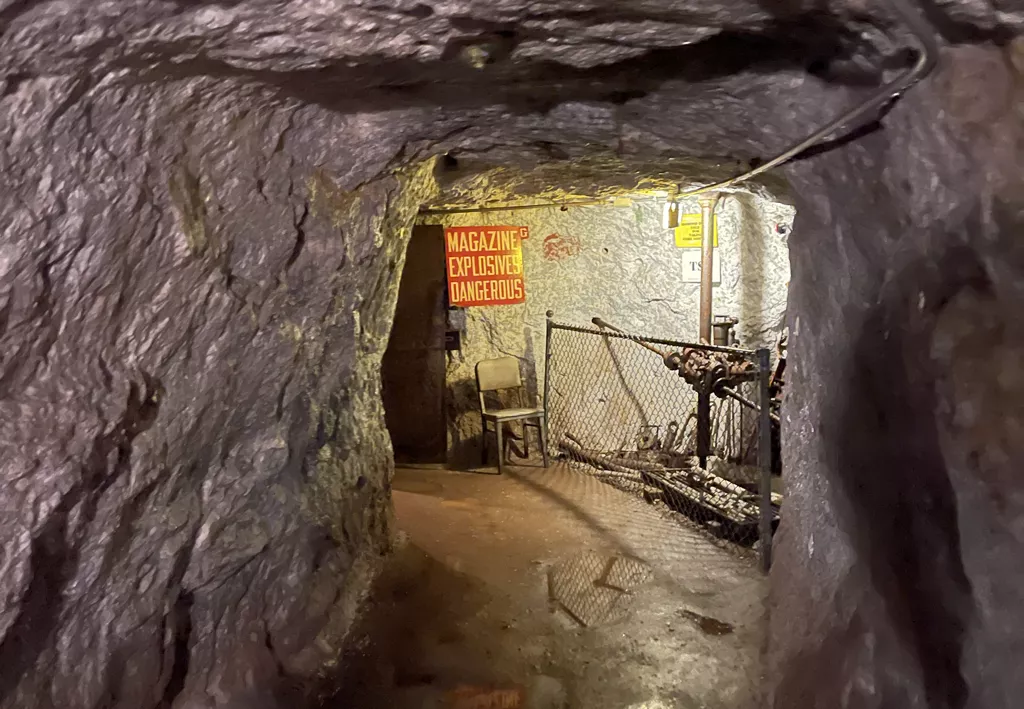
Look down a corridor and you’ll see mining equipment and a room where explosives were stored. Along the tour you’ll see mannequins handling assorted mining equipment like drills and jackhammers, setting dynamite charges, and riding an ore elevator.

The Sterling Hill Mining Museum

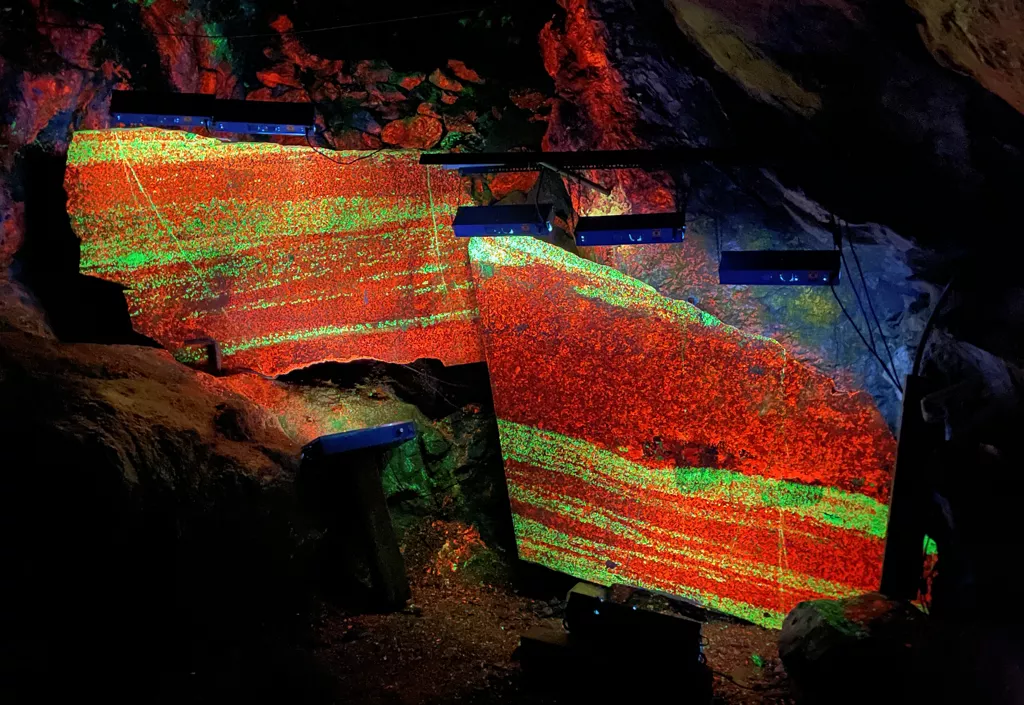
Massive Slabs of Willemite (green) and Calcite (red)

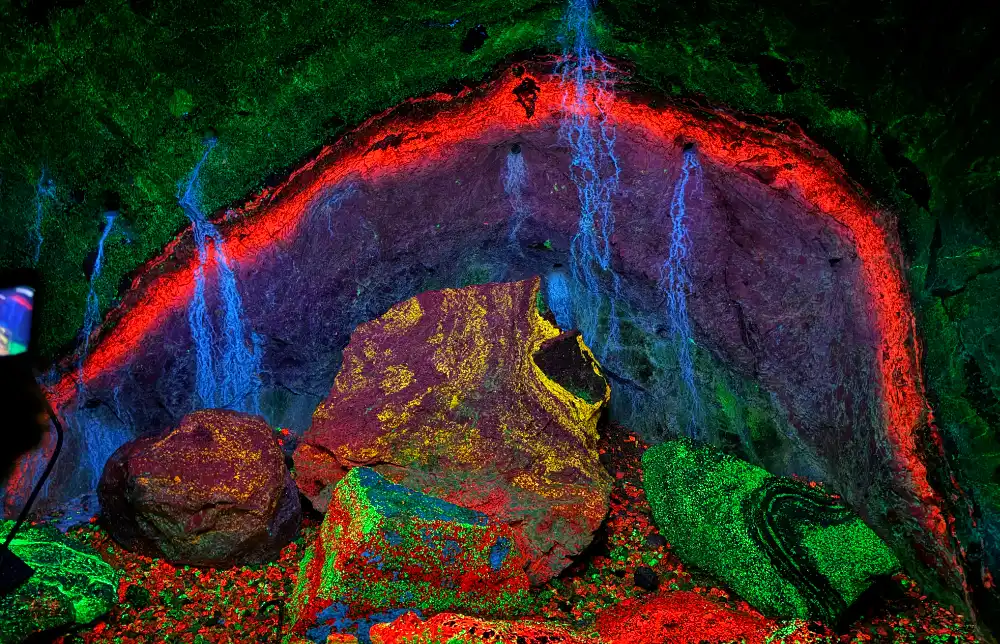
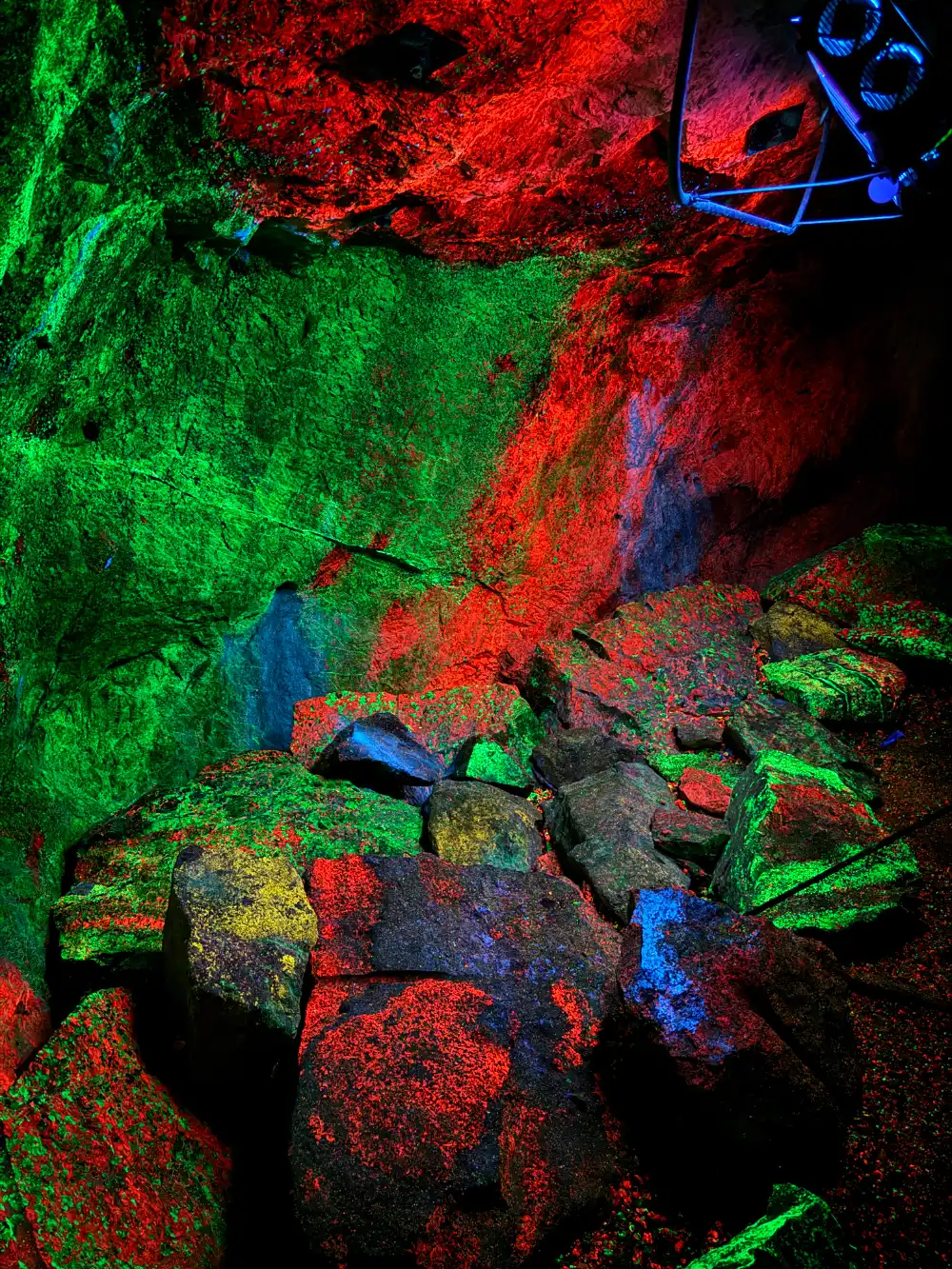
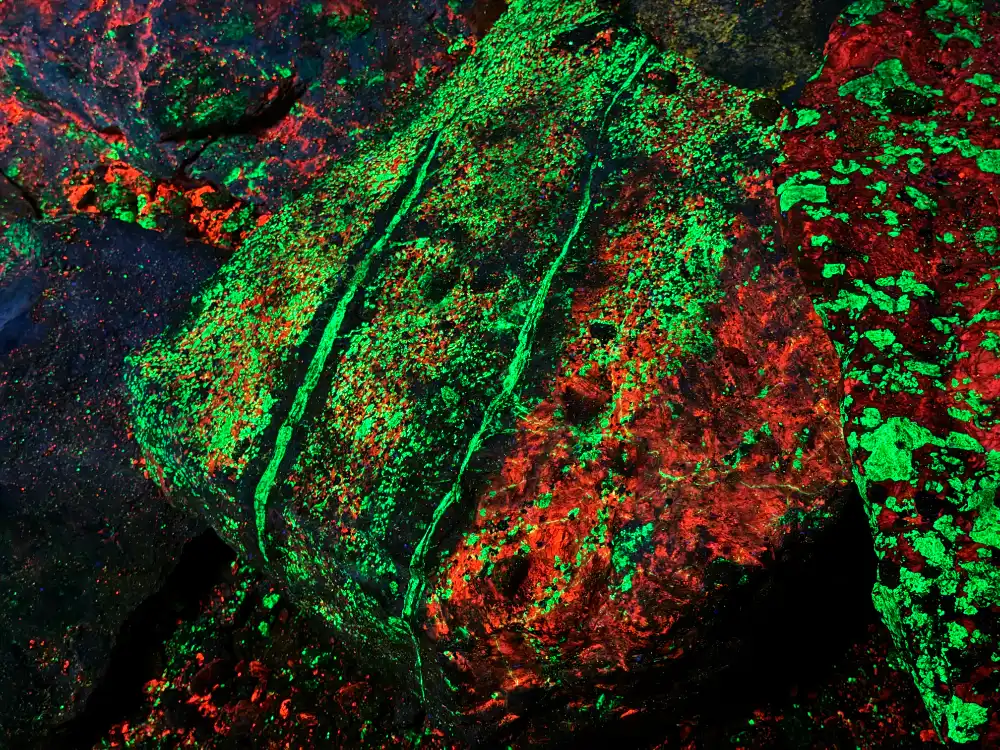
Two large slabs of rock fluorescing orange and green under shortwave ultraviolet light. The walls of the mine behind the slabs also fluoresce. Most of the orange is calcite and the green is willemite, although these are not the old minerals that fluoresce these colors. Under white light, calcite is usually white to gray, and willemite is red or green.

Fluorescent rocks. The Sterling Hill Mining Museum

The famous Rainbow Room

This is the “rainbow room” portion of the tour, featuring an anticline of green, orange, purple, and green again fluorescing rock, with a large pile of loose rocks of differing colors in front of it. Not to be missed! In the museum, there are many rooms of fluorescing rocks to explore. Green is willemite, red is calcite, blue is hydrozincite, yellow is wollastonite and I think the purple is microcline (but not sure).

rainbow room

rainbow room left

“Dead zone” Willemite

The green stripes (fluorescent Willemite) surrounded by black is known as “dead zone”.

deadzone willemite

Flowstone

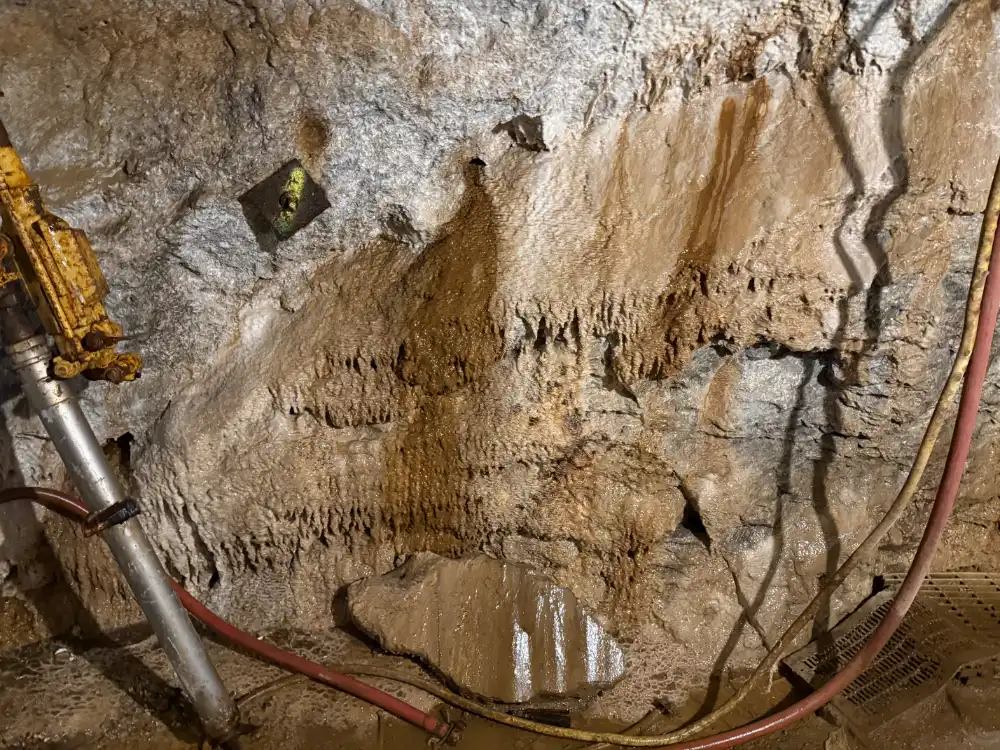
Acidic rainwater (rain water naturally has a PH of 5.5) seeps through fissures in the rock and eventually leaks out through cracks in the mine wall forming calcium flowstone, just like a formation in a natural cave.

Flowstone

Inside the Museum

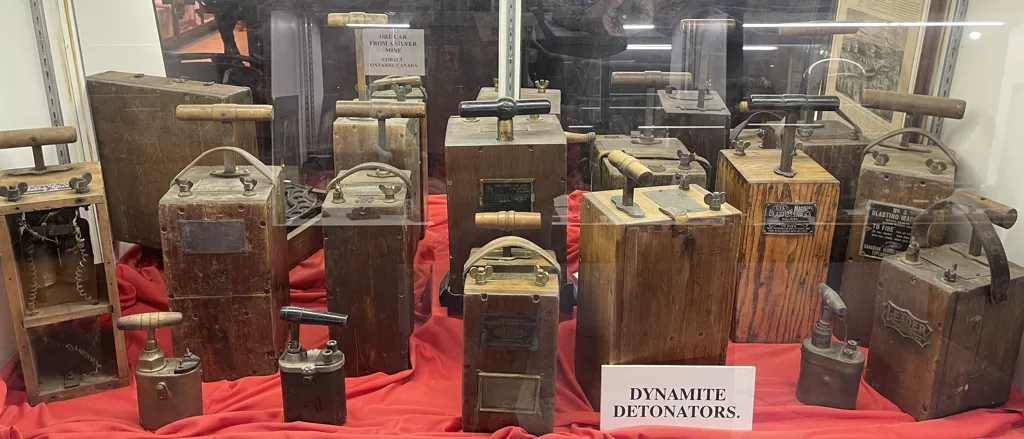
Dynamite was used to break through the solid rock of the mountain to create tunnels and get the ore down to a liftable size. The museum has an impressive collection of detonators that were used to trigger explosions from a safe distance.

Dynamite plungers. Fluorescent rocks. The Sterling Hill Mining Museum

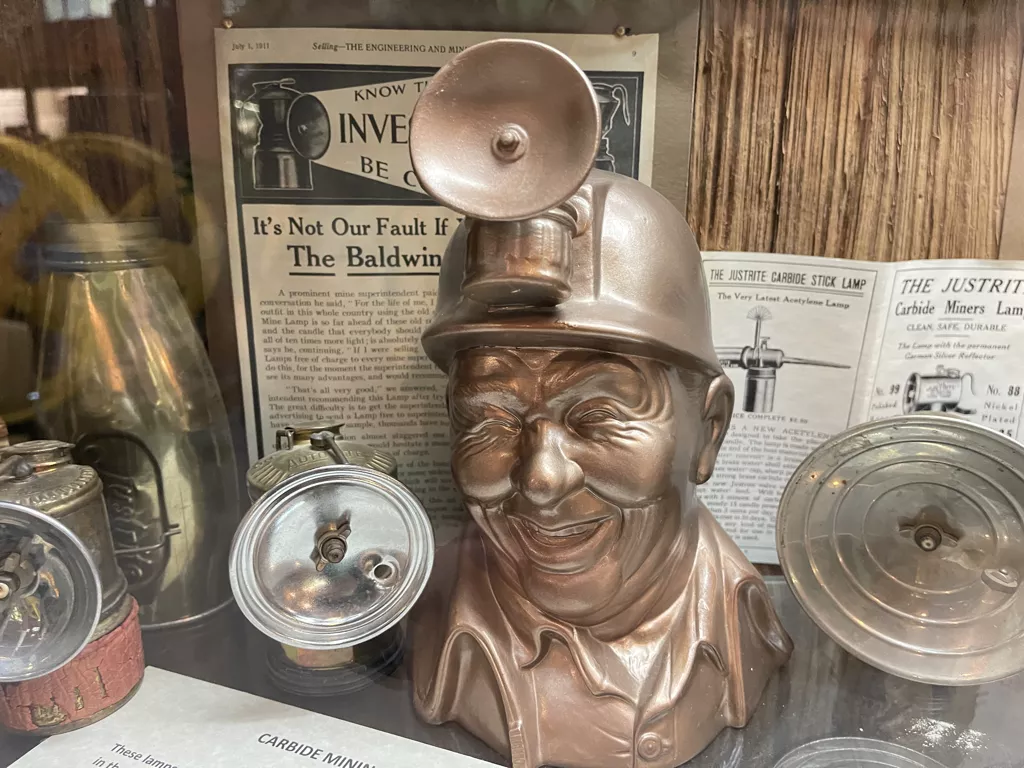
A bust of a happy miner with his mining lamp surrounded by actual carbide mining lamps. Originally miners wore hats fitted with candles.

Happy Miner. Fluorescent rocks. The Sterling Hill Mining Museum

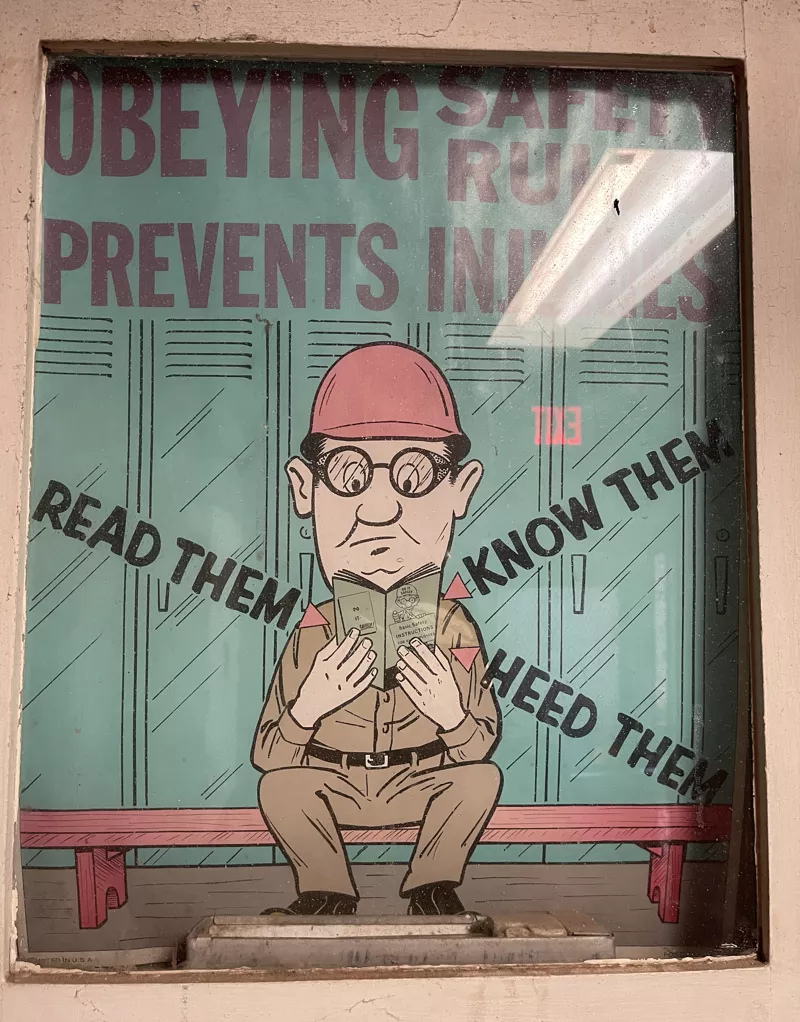
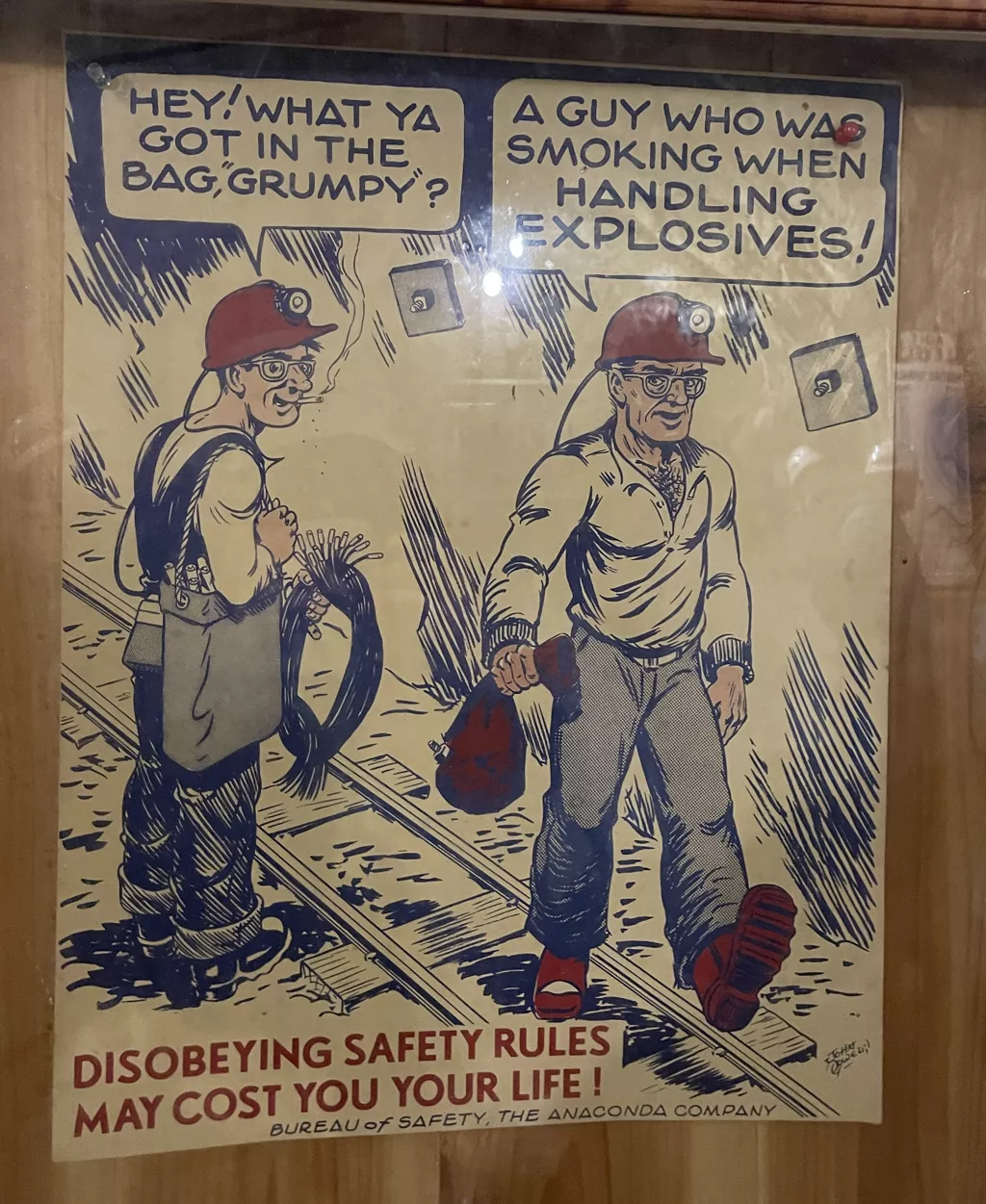
Safety first! Some mine safety cartoons from the mine tour and museum. I smacked my head on the walls of the mine a few times, so be careful. 🙂

Danger. Fluorescent rocks. The Sterling Hill Mining Museum

Warning, Fluorescent rocks. The Sterling Hill Mining Museum